
Louisiana Public Records Law
Louisiana's Public Records Law gives the public broad access to records used, prepared, possessed, or kept by public bodies. It then carves out specific exceptions. The law defines what counts as a public body and a public record, which sets the baseline that parish records are presumed open. Court records add their own judiciary rules on top, but the starting point is access.
That presumption matters in practice. A custodian who wants to withhold a record must point to a law that allows it, not just a preference. The definitions statute is where the framework begins.
The law also covers more than paper. Emails, databases, and electronic files held by a public body can be public records too. That is why a request can ask for digital files, not just printed copies, as long as the records are described clearly enough for the office to locate them.
La. R.S. 44:1 defines public bodies and public records under the state law.
From that definition flows the rest of the access rules, including who may request and how custodians must respond.
What Records the Clerk and Sheriff Maintain
Parish public records span several offices. The Clerk of Court holds court filings plus land, mortgage, conveyance, and marriage records. The Sheriff holds custody and many law-enforcement records. Other parish offices hold their own documents. The list below shows common record types and where they live.
- Court filings - civil, criminal, family, and succession records through the Clerk.
- Land and official records - deeds, mortgages, and conveyances at the Clerk.
- Marriage records - licenses and recorded marriages at the Clerk.
- Custody and booking data - through the Sheriff's corrections division.
- Parish government documents - budgets and meeting records at parish offices.
The state's parish profile is a useful map of local government and its offices.
The official Lafayette Parish profile on louisiana.gov lists the parish seat, municipalities, and local-government links.
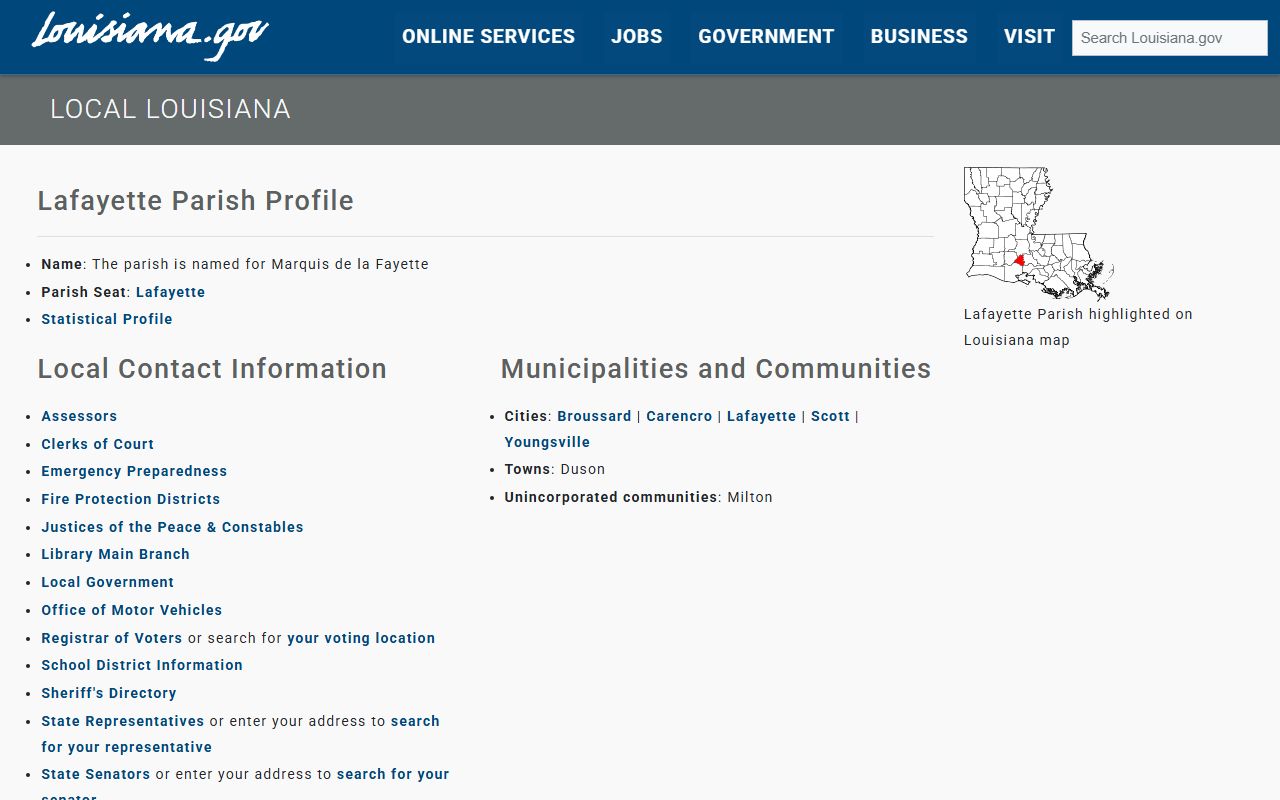
Use it to point a records request to the right parish office instead of guessing.
How to File a Public Records Request in Lafayette County
A request does not need to be fancy. Identify the records clearly, send the request to the right custodian, and be ready to pay reasonable copy fees. The right to inspect and copy belongs to any adult.
- Identify the exact records you want, with dates, names, or case numbers if possible.
- Send the request to the correct custodian, such as the Clerk or the Sheriff.
- State whether you want to inspect, get copies, or get certified copies.
- Be ready to pay the copy and certification fees the office charges.
- Keep a record of your request and the date in case you need to follow up.
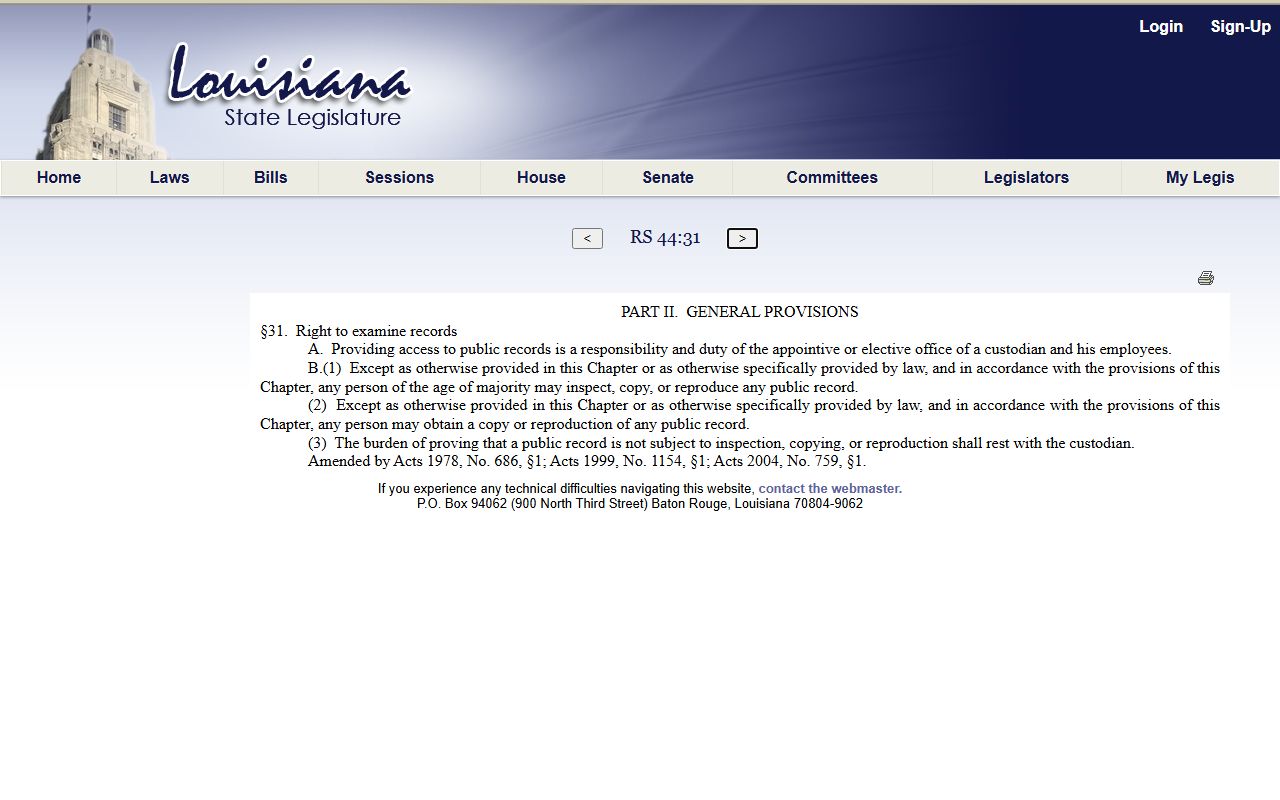
The right to examine public records is set in state law.
La. R.S. 44:31 gives any person of the age of majority the right to inspect, copy, or obtain public records, except as otherwise provided.
That right is broad, but it works best when the request is specific enough for staff to find the record fast.
Public Records Request Form Fields
Some offices use a request form, while others accept a written letter or email. Either way, the same details make a request work. The table lists the fields a request should include.
| Field | Required | Notes |
|---|---|---|
| Requester name | Yes | Used to respond and to send copies. |
| Contact information | Yes | Mail, phone, or email for the response. |
| Records described | Yes | Be specific with dates, names, or case numbers. |
| Format requested | Conditional | Inspection, plain copy, or certified copy. |
| Date of request | Yes | Helps track the response timeline. |
Response Timelines
Custodians must make public records available during regular office hours and respond within a reasonable time set by law. If a record is in active use or storage, the office must still respond and explain. The duty to permit examination, and the rules on reasonable fees, come from state statute. A custodian cannot simply ignore a proper request.
The duty to allow inspection and copying is spelled out by law.
La. R.S. 44:32 requires custodians to present records for inspection and allows reasonable copy fees.
If an office delays without a legal reason, the law gives you a way to enforce the request.
Public Records Fees in Lafayette County
Offices may charge reasonable fees for copies and certification. The Clerk's fee page lists set amounts. Plain copies are inexpensive, while certified copies cost more because the office verifies and seals them. The table shows common figures.
| Item | Amount |
|---|---|
| Plain copy per page | $1.00 |
| Certified copy | $10.00 plus copy fee |
| Conformed copy | $5.00 plus copy fee |
| Nonstandard paper size | $20.00 per page |
See the Clerk's fee page for the full schedule.
Records That Are Exempt
The law protects some records from disclosure. Juvenile and adoption records are confidential. Sealed and expunged records leave public view. Active law-enforcement and investigative records can be withheld when disclosure would harm a case or reveal a confidential source. Protected personal identifiers, victim data, and certain medical and mental-health records are also shielded.
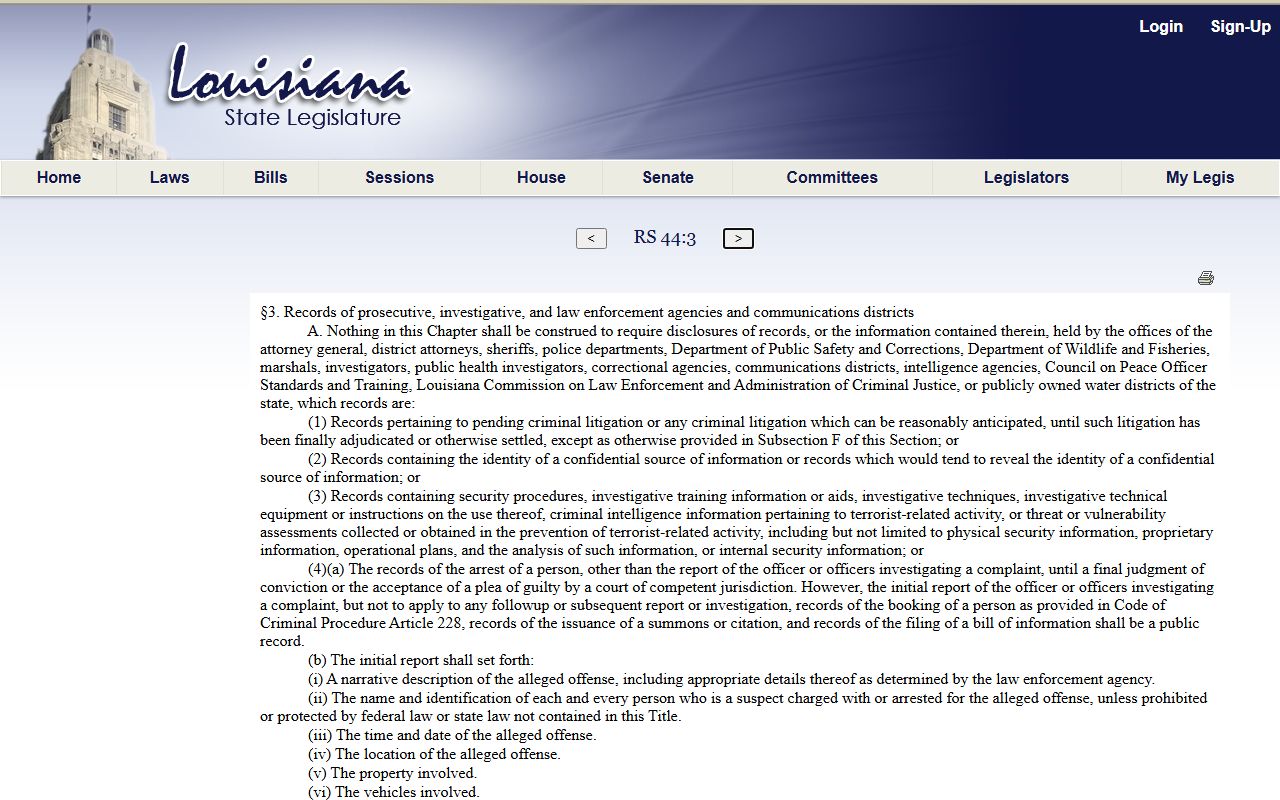
Law-enforcement records have their own rule that limits access in specific situations.
La. R.S. 44:3 restricts certain records of prosecutive, investigative, and law-enforcement agencies.
So a denied police record is not always improper; the office may be applying this specific exemption. Once an investigation closes, more of the file can open up, so a record refused today may become available later. If you are told a record is exempt, ask which provision applies and whether any part can be released with the protected details removed.
If Your Request Is Denied
A denial is not the end. Louisiana law lets a person who is refused access go to court to enforce the request. The enforcement statute allows a writ of mandamus and injunctive or declaratory relief, and in some cases the court can award costs and attorney fees. For a court record specifically, you may also need to file a motion in the case itself.
The enforcement path is set out in the law.
La. R.S. 44:35 lets a person denied access seek a court order, with possible costs and fees.
Before going to court, it often helps to ask the custodian to point to the specific exemption, since many disputes resolve once the reason is clear. Keeping a dated copy of your request and the response also strengthens your position if the matter ever reaches a judge.