
What Is a Court Docket in Lafayette County
A docket is the court's official timeline for a case. Each line, called a docket entry or minute entry, notes what happened and when. A filing, a motion, a hearing, an order, a continuance, and a judgment each get a line. The docket tells you the shape of a case at a glance: who filed what, when the court acted, and where things stand now. It does not contain the documents themselves, only the record that they exist.
In Lafayette Parish, district-court dockets come from the 15th Judicial District Court and are indexed through the Clerk of Court. City court matters keep their own dockets at Lafayette City Court. So a felony case and a city traffic case live on different dockets, even when both involve the same person. Reading the right docket starts with knowing which court handled the matter. The same person can show up on more than one docket across these courts, so match the case number to the court that issued it before you draw any conclusion about an outcome.
How to Find Lafayette County Dockets Online
For court dates, the 15th JDC court calendar is the official source. For the list of filings in a case, the Clerk's ClerkConnect and eClerks LA tools are the record indexes. City court dockets are searched on the Lafayette City Court site. Pick the court first, then the right tool.
- Open the 15th JDC court calendar for district-court dates and settings.
- Choose the court or division, or search the Clerk index for the case filings.
- Enter a party name or, better, the case number to pull the right docket.
- Review the docket entries in date order to follow the case events.
The calendar shows scheduled court activity, but it is not a complete filing history. For every filed document and order, use the Clerk's case record tools instead.
Civil and criminal dockets read a little differently. A criminal docket tracks the charge, arraignment, pleas, motions, and sentencing. A civil docket tracks the petition, answer, motions, and judgment. Family dockets fall under the civil side but may hide details when minors or protected addresses are involved. Knowing the case type helps you read the entries in the right order and spot the events that matter most.
Sample Lafayette County Docket Entry
Each docket entry packs several pieces of information into one line. Read left to right: when the event happened, what kind of event it was, who caused it, and whether a document is attached. The table breaks down a typical entry.
| Field | What It Shows |
|---|---|
| Entry Date | The date the filing or court event was recorded. |
| Event Type | The kind of event, such as motion, order, hearing, or judgment. |
| Party Filing | Which side filed the paper or asked for the action. |
| Document Link | A link or note showing whether an image is available, often gated by account. |
Confidential filings, juvenile matters, and sealed entries may be hidden or shown without a document link in public views.
Courts That Publish Dockets in Lafayette County
Several courts handle cases in the parish, and each keeps its own dockets. The 15th Judicial District Court runs the main trial dockets. Lafayette City Court handles city traffic, misdemeanor, and civil dockets. Specialty court programs run their own supervised dockets within the district court. Justice of the peace courts keep limited local dockets.
- 15th Judicial District Court - felony, civil, family, and succession dockets.
- Lafayette City Court - city traffic, misdemeanor, OWI, and civil dockets.
- Specialty courts - drug, treatment, and behavioral-health dockets under judicial supervision.
- Justice of the peace courts - small civil and limited local matters.
Specialty court dockets follow a different rhythm, with regular status reviews instead of one-time hearings.
The 15th JDC specialty court page lists the current problem-solving programs and how their dockets work.
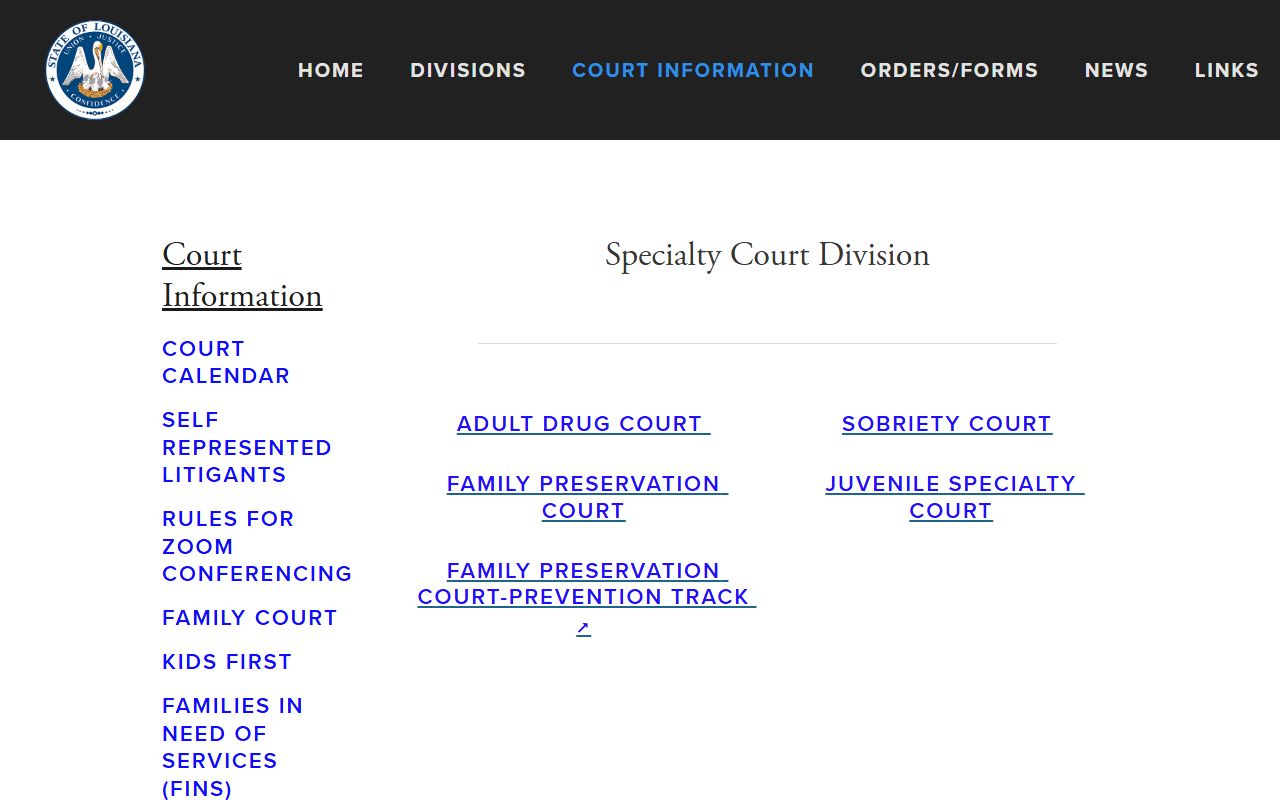
Because participants return often for reviews, these dockets show repeated settings for the same case over many months.
Docket vs. Full Case Record
The docket and the case file are not the same. The docket is the index of events. The case file holds the actual motions, exhibits, orders, and judgments. You read the docket to track progress, and you pull the file when you need the documents themselves.
| Docket | Full Case Record | |
|---|---|---|
| Format | List of dated entries | Full documents and images |
| Access | Often online and free to view | May require an account, fee, or counter visit |
| Use | Track case progress and dates | Legal review, evidence, certified copies |
For the document side of a case, see the Lafayette County court records page.
Lafayette County Divisions and Judges
Cases in the 15th JDC are assigned to divisions, each with a judge. The division and judge appear on the docket and the calendar. Lafayette City Court also runs by division. Its official site lists Judge Douglas J. Saloom in Division B and Judge Roya Boustany in Division A, who began in February 2025. Knowing the division helps you find the right courtroom and the right calendar setting.
City court divisions handle the city's traffic, criminal, and civil dockets from the East Convent Street building.
The Lafayette City Court judges page identifies the sitting judges and divisions.
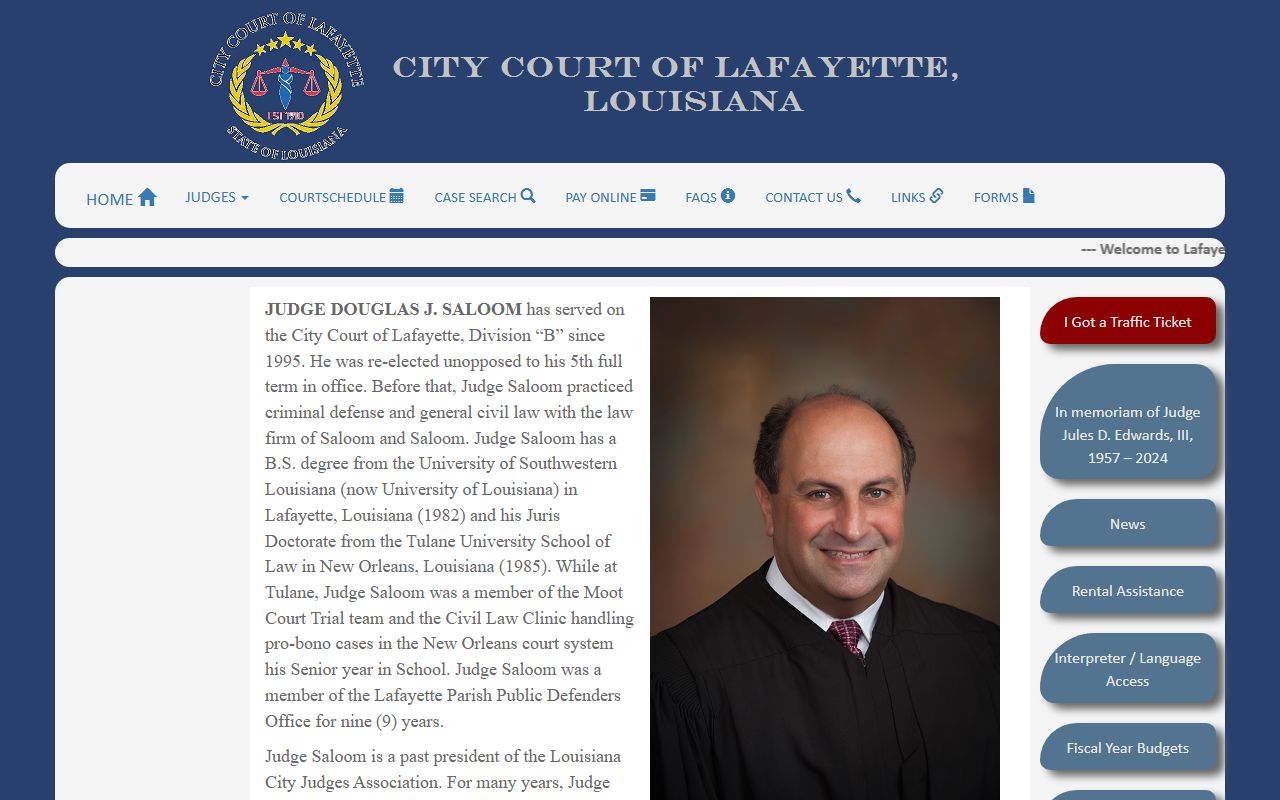
If you do not know the division, search by the party name or case number and the assignment will show on the result.
How to Read a Lafayette County Docket
Dockets use shorthand. "Mot" marks a motion. "Ord" marks an order. "Cont" marks a continuance, which postpones a setting. "Disp" marks a disposition, the outcome. A bill of information is the prosecutor's charging paper, and a capias is a court-issued warrant, often for a missed date.
Disposition lines tell you how a matter ended. "Dismissed with prejudice" means it cannot be refiled. "Dismissed without prejudice" leaves room to refile. A guilty plea or a verdict shows a conviction, while a not-guilty finding or a dismissal does not. Read the latest entries first to see where a case stands today.
Note: A missed court date can trigger a bench warrant or capias, so contact the court or an attorney right away rather than waiting.
Limits of Lafayette County Docket Searches
Online dockets and calendars have gaps. The calendar shows settings but not every filing. Some entries post after a delay. Sealed, juvenile, and confidential matters may not appear at all. A blank result is not proof that no case exists, only that the public index has nothing to show you. When a date or status matters, confirm it with the Clerk or the court division before you act.
Continuances add another wrinkle. A setting on the calendar can move when a party files for more time and the judge grants it. The old date stays on the docket, and a new line shows the reset. So the most recent entry is the one to trust. Always check the latest docket line, not an older printout, before you plan a trip to the courthouse.