
About the Lafayette County Clerk's Office
The Lafayette Parish Clerk of Court is led by Clerk Louis J. Perret, whose official biography and office overview are posted on the Clerk site. The office sits in the Lafayette Parish Courthouse downtown and serves as the local custodian for civil, criminal, family, probate, marriage, mortgage, and conveyance records. It is the practical hub for both court filings and many official public records in the parish.
Lafayette Parish Clerk of Court
800 South Buchanan Street
Lafayette, LA 70501
See lpclerk.com/contact-us
Mon-Fri, regular court hours
The Clerk's biography page introduces the office and its leadership.
The Clerk of Court about page gives the office overview and the current Clerk's background.
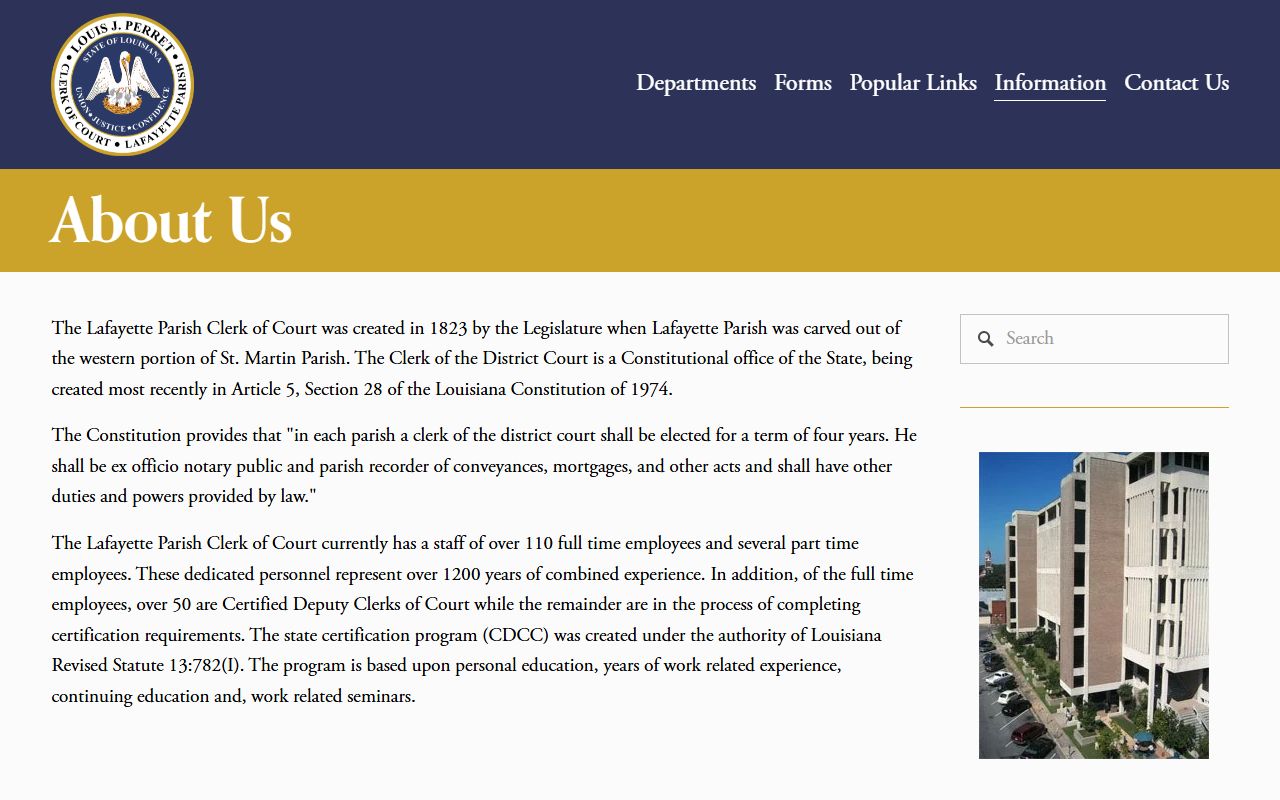
From there, the site links each department and online service in one menu.
What the Clerk Does in Lafayette County
The Clerk wears many hats. The office records and indexes filings, issues certified copies, manages marriage licenses, and keeps land and official records. It also points users to online access tools. The list shows the main duties.
- Records civil, criminal, and family court filings for the 15th JDC.
- Keeps probate and succession filings for the parish.
- Issues marriage licenses and records marriages.
- Maintains mortgage, conveyance, and land records.
- Provides online access through ClerkConnect, eClerks LA, and eSearch.
Because one office handles so much, it is the first call for most parish record needs, even when you are not sure which department holds the file.
The Clerk also keeps the official indexes that make records findable. When a deed, a judgment, or a marriage is recorded, the office indexes it by name and date so it can be located later. That indexing work is why a search by party name can turn up a record even when you do not have the case or instrument number in hand.
How to Request a Certified Copy
A certified copy carries the Clerk's seal and is what courts, banks, and agencies accept. Online images and index prints are not certified. Request a certified copy from the Clerk and pay the certification fee plus the per-page copy fee.
- Identify the record by name, case number, or instrument number.
- Contact the right department, or visit the counter at the courthouse.
- Ask for a certified copy and confirm the current fee.
- Pay the certification fee plus the per-page copy fee.
- Bring identification if the office requests it for the record type.
For records that are old, sealed, or not imaged online, ask the Clerk directly rather than relying on the online index alone. Turnaround depends on the record and the request volume, so for a tight deadline, ask about timing when you place the request and consider ordering more than one copy at once.
Records Request Form Fields
Whether you use a form, a letter, or an in-person request, the same details make it work. The table lists what to include.
| Field | Required | Notes |
|---|---|---|
| Requester name | Yes | Used to respond and release copies. |
| Contact information | Yes | Mail, phone, or email. |
| Record described | Yes | Names, case or instrument number, and dates. |
| Copy type | Conditional | Plain, conformed, or certified copy. |
| Department | Conditional | Civil, criminal, marriage, or land records. |
Lafayette County Clerk Fees
The Clerk posts a detailed fee schedule. Copy fees are modest, certified copies cost more, and recording and civil deposits run higher. The table shows common items, with the full list on the Clerk site.
| Item | Amount |
|---|---|
| Plain copy per page | $1.00 |
| Conformed copy | $5.00 plus copy fee |
| Certified copy | $10.00 plus copy fee |
| Recording, one index, 1-5 pages | $105.00 |
| Birth certificate | $34.00, cash only |
The Clerk's fee page lists every category and the current amounts.
See the Clerk fee schedule for recording, civil deposit, and copy fees.
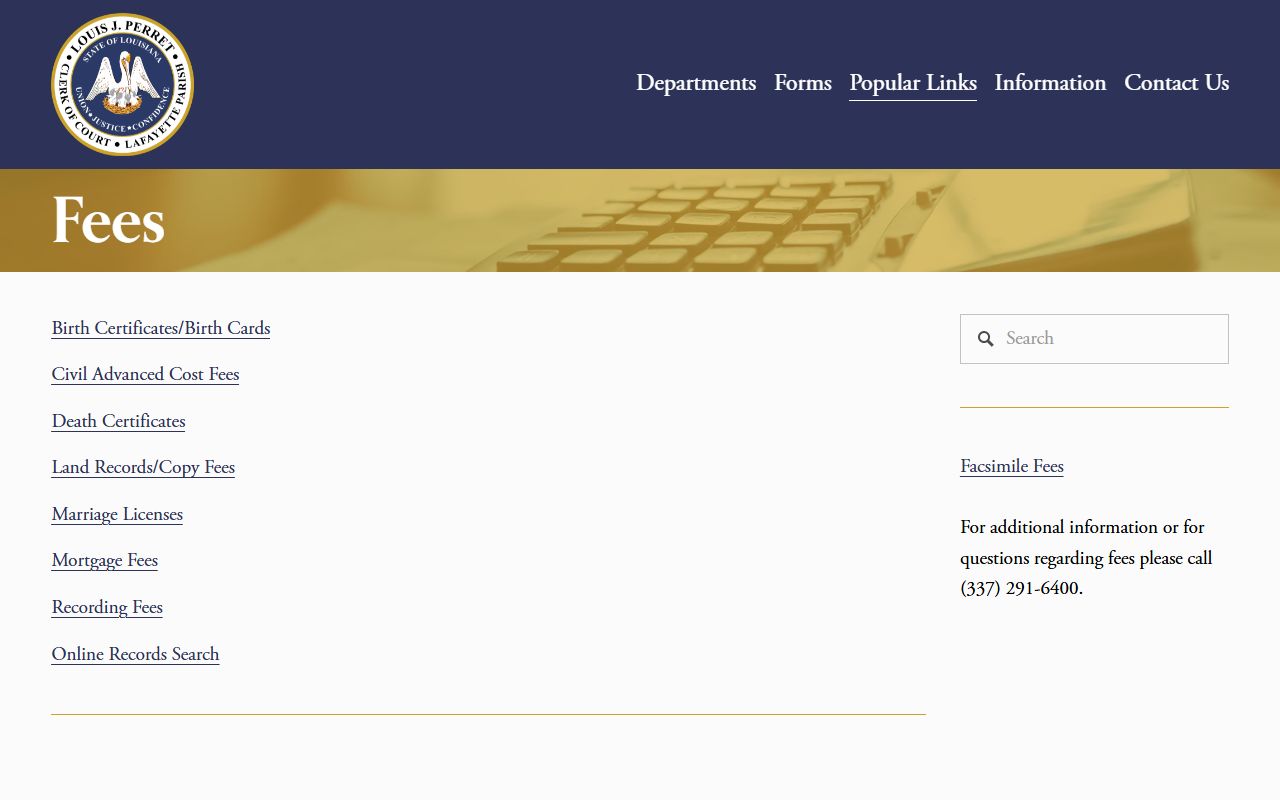
Check the page before you visit, since cash-only categories and recording fees can catch people off guard.
Marriage Services at the Clerk
The Clerk issues marriage licenses and records the marriage after the ceremony. The marriage page lists the identification, age, waiting-period, and fee rules. A license comes first, and the recorded marriage record and certified copy follow once the signed license is returned. For the full process and divorce records, see the marriage and divorce records page.
The Clerk's marriage page is the official source for license requirements.
The Clerk marriage page covers license requirements and how to request marriage records.
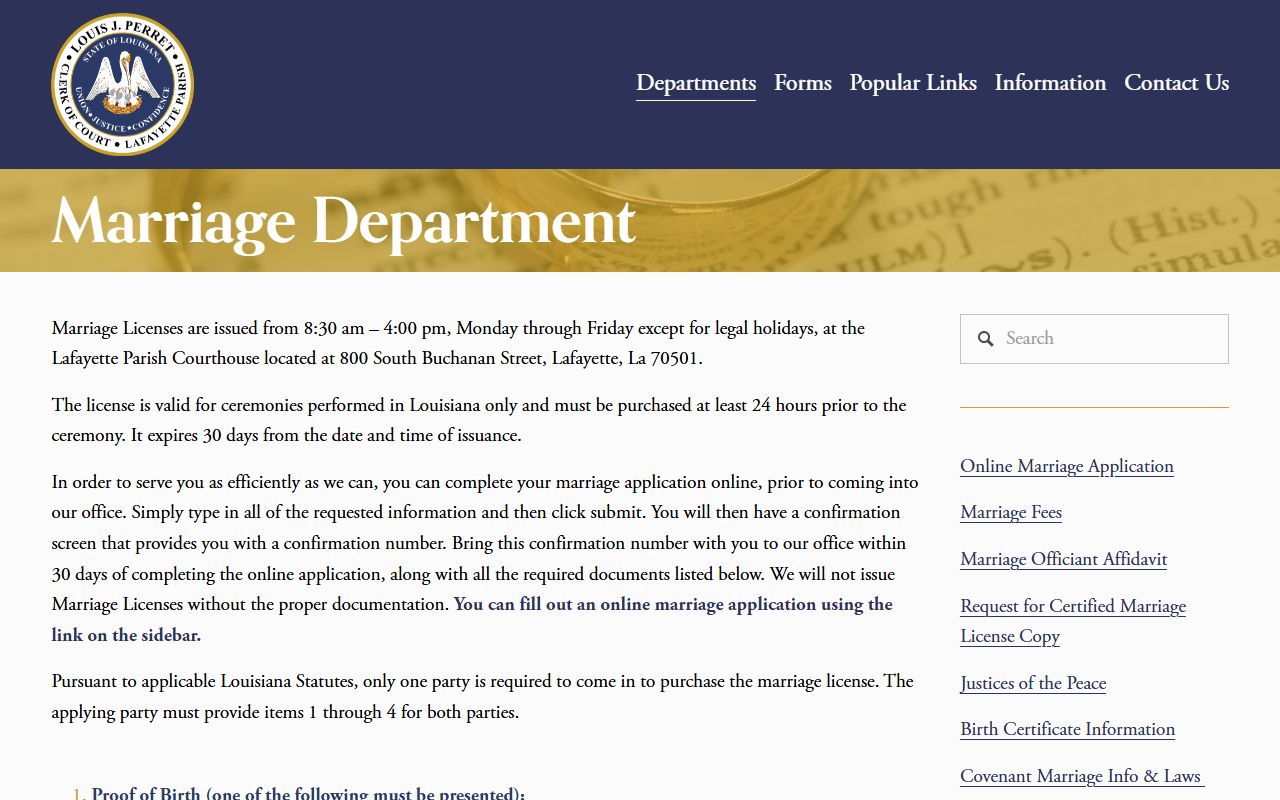
Confirm the current rules before you go so both applicants bring the right identification.
Expungement Filings Through the Clerk
Expungement is a court process that limits public access to eligible arrest and conviction records. The Clerk's expungement page points to the forms and the local filing steps. A petition identifies the arrest, charge, docket, and disposition, and several agencies, including the district attorney, sheriff, and Louisiana State Police, may have notice or response rights. Eligibility, fees, and waiting periods are set by statute.
The Clerk's expungement page gathers the forms and guidance in one place.
The Clerk expungement page links the filing forms and explains the local process.
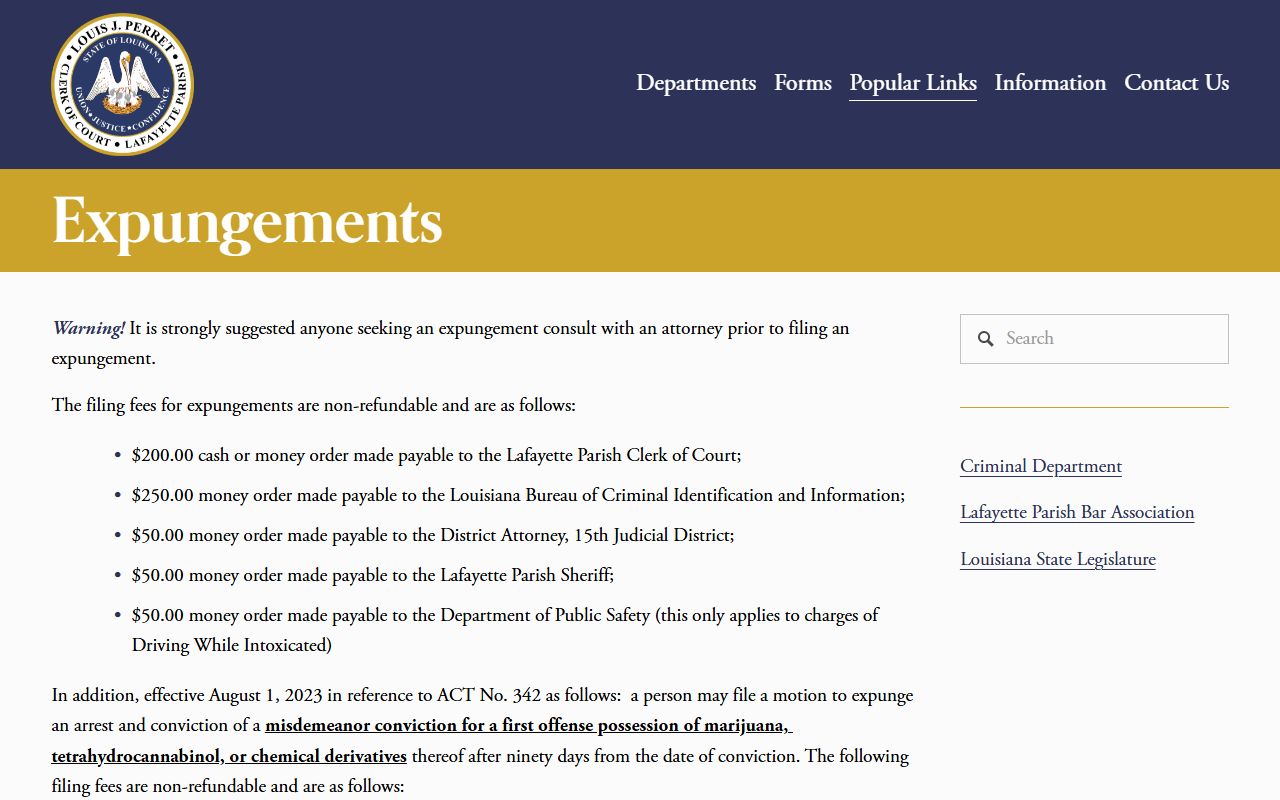
Because eligibility turns on the details of a case, many people consult an attorney before filing. More background sits on the arrest records page.
Common Clerk Forms
The Clerk hosts a forms library for the most-used filings. Download the right form before you visit so the counter trip goes faster.
- Clerk forms library - the central page for clerk forms.
- Expungement forms - for clearing eligible records.
- Civil filing information - for suits, service, and pleadings.
- Marriage license information - requirements and records.
Mail and Online Filings
The Clerk links several online tools. ClerkConnect handles record searches, eClerks LA gives remote clerk access, and eSearch covers official-record and property-style searches. These tools help you identify a record, but certified copies still come from the Clerk. If a record is sealed, very old, or not imaged, the online index may not show it, so contact the office directly. For statewide court information, the Louisiana judiciary site is a useful companion.
Clerk staff can explain procedure and locate records, but they cannot give legal advice or tell you what to file. For that, the parish has legal-aid and pro bono resources. The office's role is to keep the records accurate and accessible, and to issue the certified copies that make those records usable outside the courthouse.