
How to Search Lafayette County Court Records
The Lafayette Parish Clerk of Court is the local custodian for court records, and its site is the first stop. The Clerk links three online tools: ClerkConnect for record searches, eClerks LA for remote clerk access, and eSearch for official-record and property-style searches. Court dates come from the 15th Judicial District Court calendar, not the record index. Pick the record category first, since civil, criminal, family, and succession records may live in separate modules with different access rules.
Have your details ready before you start. A full party name is the minimum. A case number gets you straight to a file. A rough filing date helps with older records. Then follow these steps.
- Open the Clerk site at lpclerk.com and choose the matching department or online service.
- Launch ClerkConnect or eClerks LA and search by party name when you do not have a case number.
- Add a record type and date range to narrow a long result list.
- Open the case to read the docket, parties, and dispositions.
- Ask the Clerk for a certified copy if you need one for legal use.
ClerkConnect is the official clerk-linked search tool, and its landing page is free to view.
The ClerkConnect portal exposes the search modes for parish court and official records.
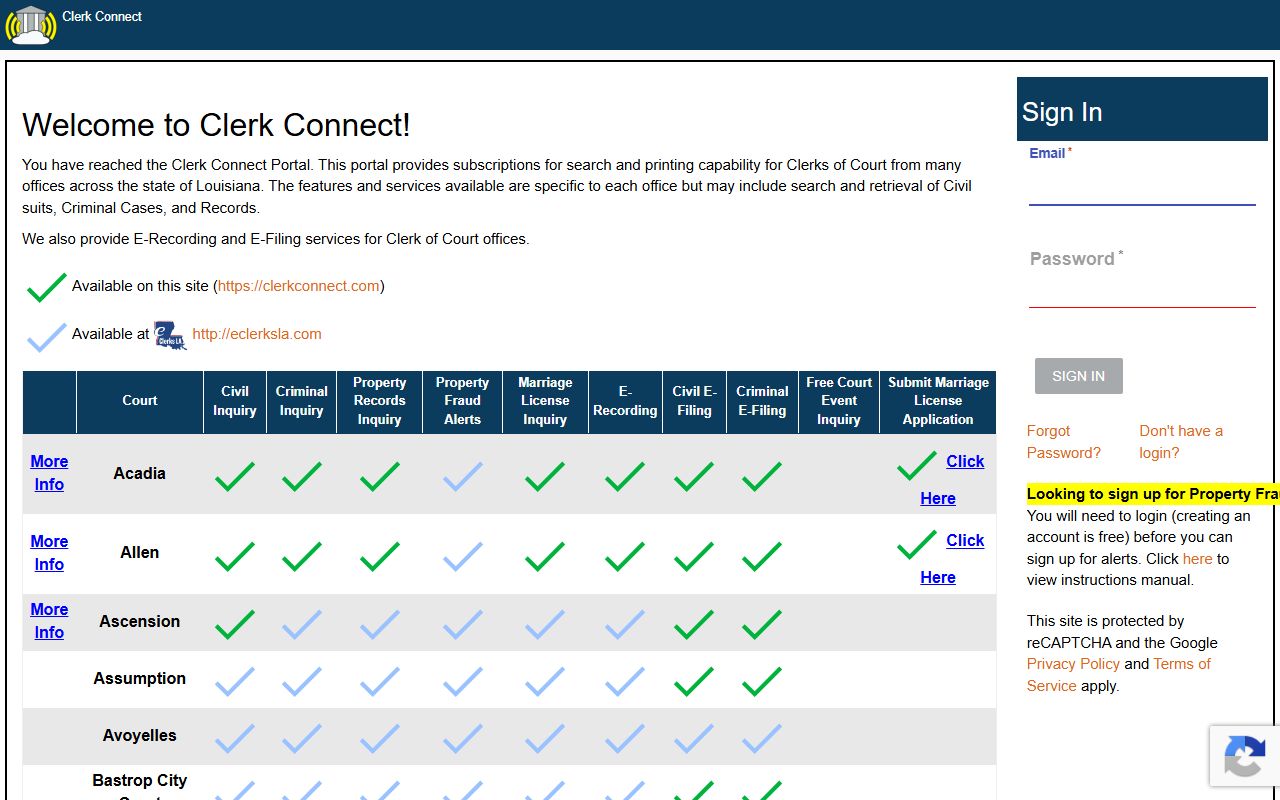
Deeper document viewing or certified images may require an account, so plan for that before you rely on free index results.
Lafayette County Court Records Search Fields
Clerk portals share a familiar set of fields. You can usually search by party name, by case or instrument number, or by a date range. Some indexes, such as mortgage or conveyance records, depend on account permissions. The table lists the fields you will most often see.
| Field Label | Type | Required | Notes / Format |
|---|---|---|---|
| Parish / Court | Dropdown | Yes | Select Lafayette Parish or the 15th JDC on multi-parish tools. |
| Record category | Dropdown / tabs | Conditional | Civil, criminal, family, probate, mortgage, conveyance, marriage. |
| Last name | Text | Name search | Surname of a person party. |
| First name | Text | No | Narrows a name search. |
| Case number | Text | Case search | Best for a known court case. |
| Instrument number | Text | No | Used more for official records. |
| Date range | Date | No | Filing or recording start and end dates. |
eClerks LA gives remote access to Louisiana clerk records and official indexes.
The eClerks LA portal works on an account model for statewide remote clerk access.
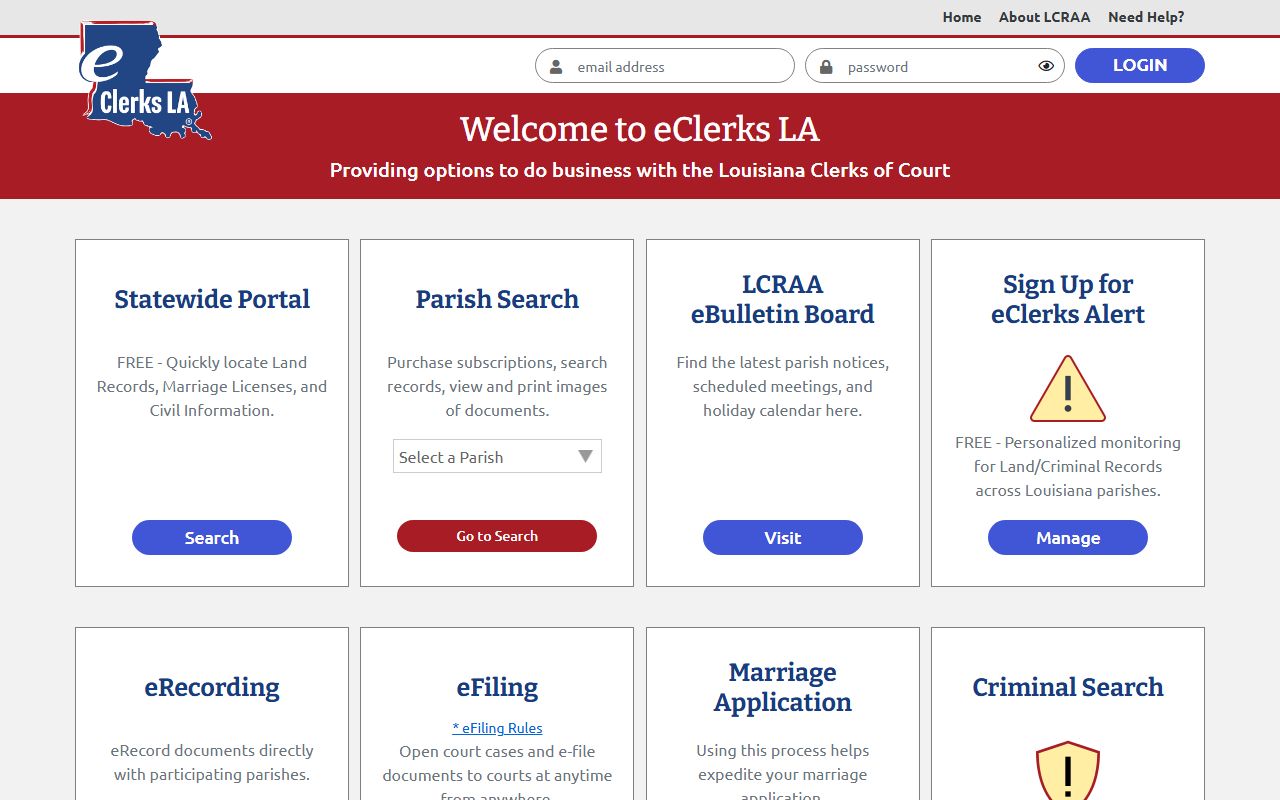
The online index is useful for finding a record, but certified copies still come from the Clerk.
Types of Lafayette County Court Records
The parish keeps several record types, each from a different department. Civil records cover suits, judgments, garnishments, and liens. Criminal records cover charges, minutes, pleas, and sentences. Family records cover divorce, custody, and support. Successions handle estates. Many of these are public, but juvenile and sealed files are not.
Which court produced the record decides where you search and what access applies.
- Civil records - petitions, answers, motions, judgments, and related pleadings.
- Criminal records - bills of information, indictments, minutes, and dispositions.
- Family records - divorce, custody, support, and protective orders.
- Probate / succession records - wills, inventories, and judgments of possession.
- Marriage records - licenses and recorded marriage proof from the Clerk.
Civil filings move through the Clerk's civil department, which handles suits, service, and pleadings.
The Clerk's civil department page explains filings, service, and civil record access.
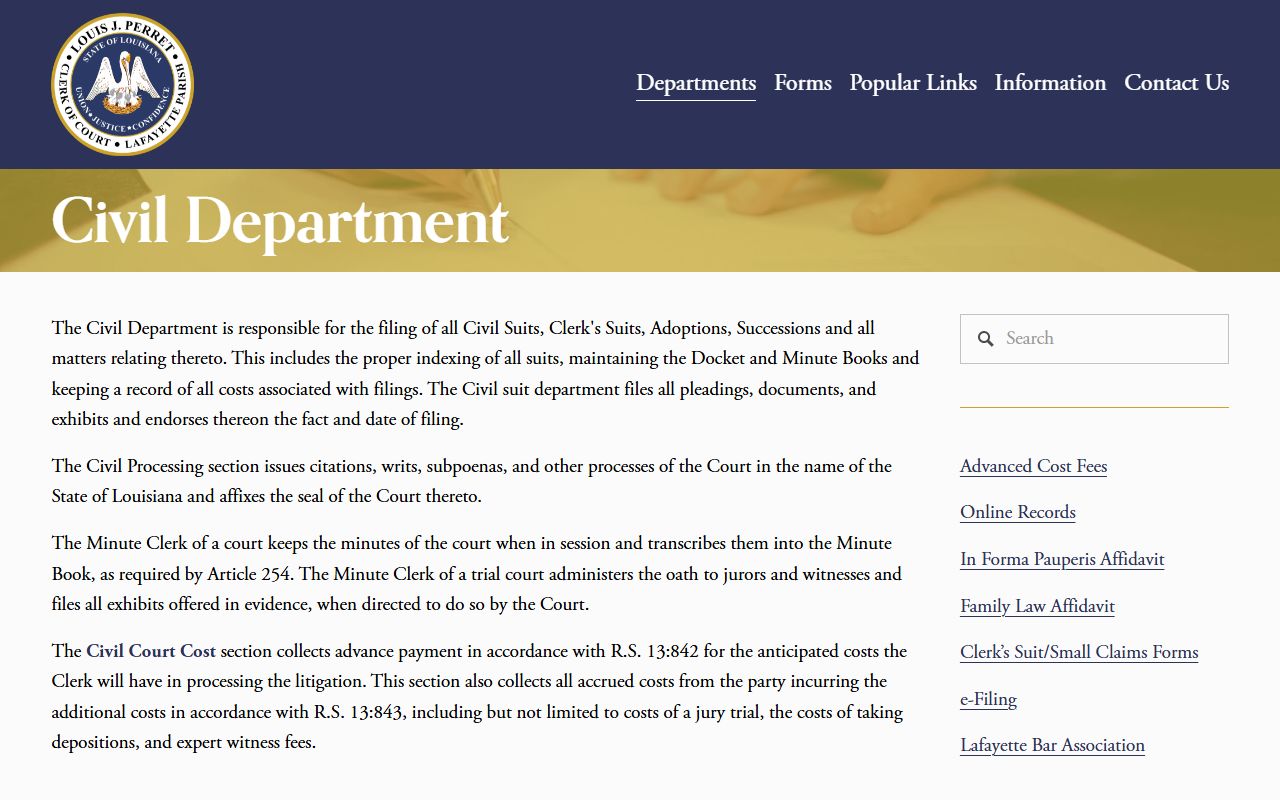
Older or non-imaged civil records may need clerk help, since not every file is online.
What Lafayette County Court Records Show
A case record holds a standard set of fields. You can expect a case number, the court and parish, the assigned division or judge, and the parties. The docket lists filings, hearings, and the outcome. Financial entries may show fees, fines, bond, or judgment amounts. Protected data is redacted from public views.
| Field | What It Shows |
|---|---|
| Case Number | The clerk-assigned docket ID for the case. |
| Filing Date | When the petition, bill, or motion was filed. |
| Parties | Plaintiff and defendant, or state and defendant, or petitioner and respondent. |
| Division / Judge | The assigned 15th JDC division and judge. |
| Docket / Minutes | The dated list of filings, orders, and court events. |
| Disposition | The outcome, such as dismissed, pled, convicted, or judgment entered. |
Criminal court records are kept by the Clerk's criminal department alongside minutes and filings.
The Clerk's criminal department page covers criminal filings, minutes, and records.
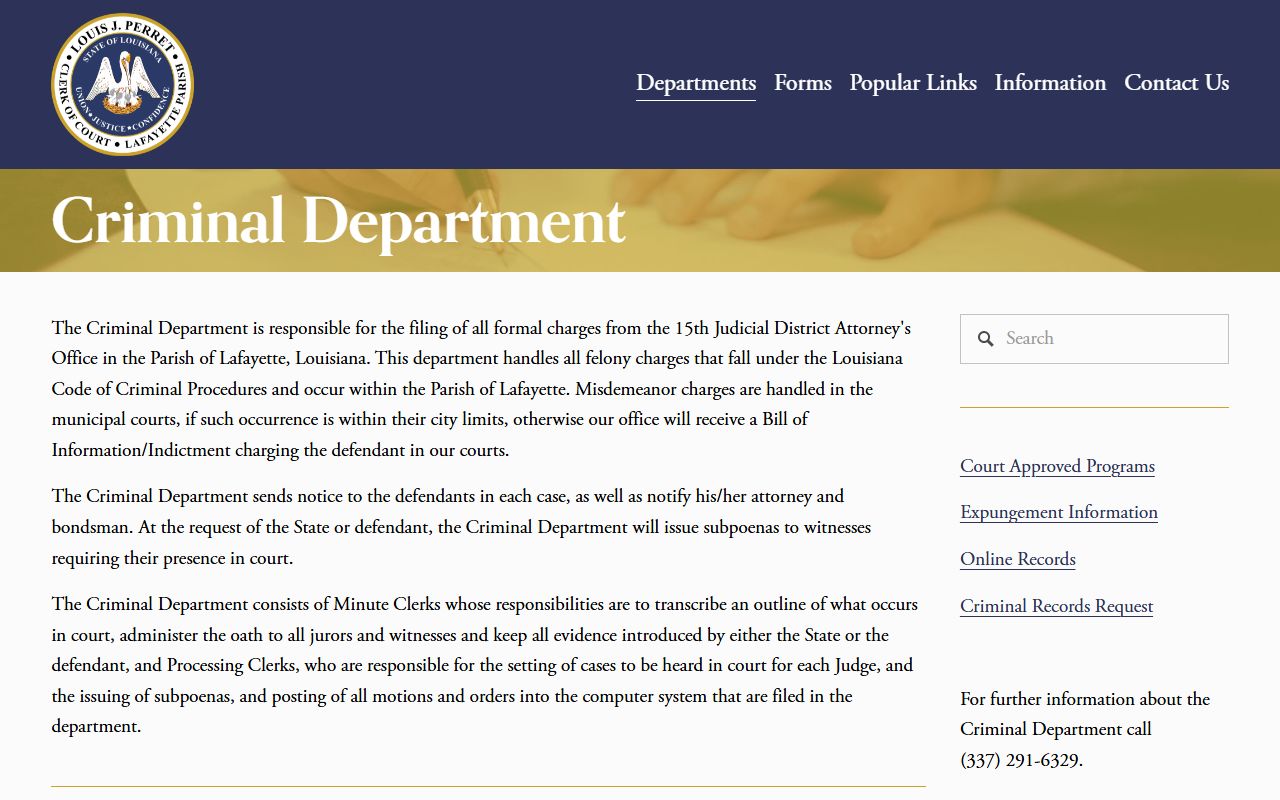
For arrest and booking data, the arrest records page covers the sheriff side of the picture.
Public Access Framework for Lafayette County Court Records
Louisiana's Public Records Law presumes records held by public bodies are open unless a law makes them private. Any adult may inspect and copy public records, and custodians must allow it during regular hours. Reasonable copy fees are allowed. Court records also follow judiciary rules, so open access does not override sealed, juvenile, or active-investigation limits.
To request a record, you generally provide enough detail to identify it and pay the copy fee. A denied request can be challenged under the enforcement statute, which allows a person to seek a court order and, in some cases, costs and fees.
Fees stay modest for plain copies but rise for certified ones. The Clerk charges $1.00 per page for copies, $5.00 plus the copy fee for a conformed copy, and $10.00 plus the copy fee for a certified copy. The duty to permit copying, and the fee rules behind it, come from the state statute. The current local schedule is posted on the Clerk fee page.
Note: Under La. R.S. 44:31, any person of the age of majority may inspect and copy public records except where the law provides otherwise.
Records That Are Sealed or Confidential in Lafayette County
Some court records are closed. Juvenile case files are restricted under the Louisiana Children's Code. Adoption records are confidential. Sealed records need a court order to view. Expunged records leave public access, though authorized agencies may keep them. Active investigative files can be withheld under the law-enforcement records statute while disclosure would harm a case.
To view a sealed record, file a motion in the case and ask the judge for access. The court weighs your reason against the privacy interest. Family files involving minors, finances, or protected addresses may show only redacted versions.
Family court divorce and domestic matters are handled in the 15th JDC and indexed by the Clerk.
The Clerk's family court page describes divorce and domestic record access and limits.
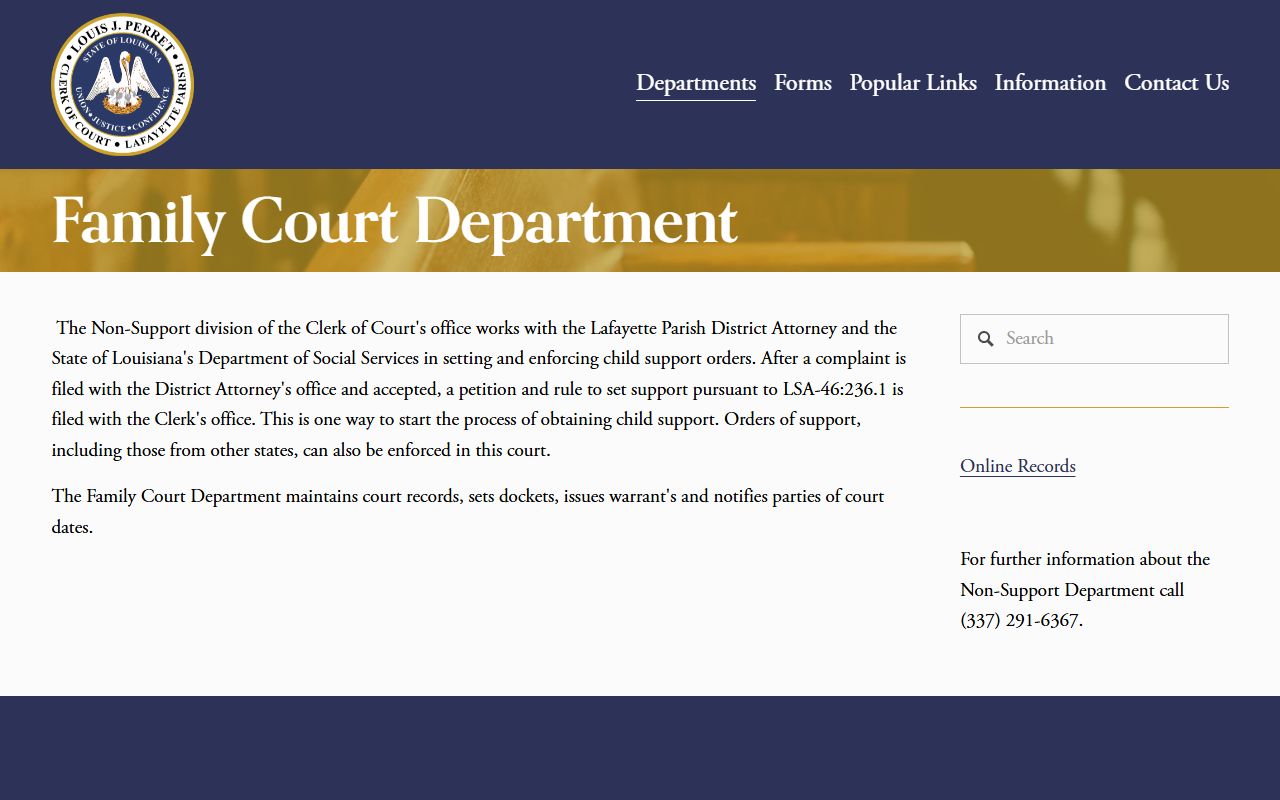
Because family files can carry sensitive data, expect some fields to be sealed or redacted in public views.
In-Person Court Record Requests
You can request records in person at the Lafayette Parish Courthouse. Bring the case number or party name, plus a way to pay the copy and certification fees. Certified copies must come from the Clerk, and online images do not substitute for them. Confirm department contacts and current hours on the Clerk site before you go.
Older records can take longer. If a file predates the online index, was never imaged, or sits in a sealed or restricted category, the counter staff may have to pull it by hand or explain why it cannot be released. Do not assume that a blank online search means no case was ever filed. When a record matters for a deadline, call the right department first so the visit is not wasted.
Lafayette Parish Clerk of Court
800 South Buchanan Street
Lafayette, LA 70501
See lpclerk.com/contact-us
Mon-Fri, regular court hours