
Arrest Records in Lafayette County
An arrest record documents a booking. When the Lafayette Parish Sheriff's Office takes a person into custody, it records the name, the booking number, the date, the charge, and the bond. That booking entry is the arrest record. Recent bookings and the active jail roster are the closest thing the parish offers to a public list of recent arrests. The Sheriff replaced its older JADES system with the 365Labs Community Portal, where the public can search people in custody and recent bookings.
Arrest records sit apart from the court case. The Sheriff books and holds people. The 15th Judicial District Court and the Clerk handle the charges, pleas, and outcomes once the case moves forward. So a full picture often means checking both the jail side and the court side. For booking and roster details, the inmate records page goes deeper into the custody search.
Booking itself is a process, not a single moment. After an arrest, a person is brought to the jail, identified, searched, photographed, and medically screened. Charges, warrants, or holds are entered into the system. A judicial officer or court process sets bond when the offense allows release. Each of those steps can add an entry to the arrest record, which is why a booking page may list more than one charge or a bond figure that changes after a court appearance.
How to Search Lafayette County Arrest Records
Start with the Sheriff's offender-information page, which links the current custody portal and the VINELink notification service. Search by name and check both the active inmate list and recent bookings. For the court case that follows an arrest, switch to the Clerk's criminal record tools.
- Open the Sheriff's offender information page and launch the custody portal.
- Search by last name, then check the active inmate and recent booking views.
- Review the booking entry for charge, bond, and booking date.
- For the charge's court case, search the Clerk's criminal records tools by name or case number.
Booking data can change by the hour, so treat the portal as a snapshot, not a final record. Call the jail for urgent or unclear custody questions.
Arrest Records vs. Criminal Court Records
An arrest record and a criminal court record cover different stages. The arrest record is the booking. The court record is the case. One comes from the Sheriff, the other from the court and Clerk.
| Arrest Record | Criminal Court Record | |
|---|---|---|
| Source | Lafayette Parish Sheriff | 15th JDC and Clerk of Court |
| Shows | Booking, charge, bond, custody | Charges, pleas, motions, disposition, sentence |
| Stage | Start of the process | The full case and outcome |
For the full case history behind a charge, see Lafayette County court records.
Charges vs. Convictions
A charge is an accusation. A conviction is a finding or plea of guilt. The two are easy to confuse on a record, but they mean very different things. Many charges are dropped, reduced, or dismissed, and a person is presumed innocent until the court rules.
| Charge | Conviction | |
|---|---|---|
| Meaning | A formal accusation | A guilty plea or guilty verdict |
| Where it shows | Booking and charging documents | The case disposition |
| Legal weight | None on its own | The court's final finding |
Only the disposition in the court record tells you how a case ended. A booking by itself never does.
Sealed vs. Expunged Records
Louisiana uses expungement to limit public access to eligible arrest and conviction records. A sealed record is hidden by court order. An expunged record is removed from public view, though authorized agencies may keep access under the law. The two overlap but are not identical.
| Sealed | Expunged | |
|---|---|---|
| How | Court seals by order | Petition under the Code of Criminal Procedure |
| Public access | Blocked without a court order | Removed from public view |
| Agency access | Limited to authorized parties | Some agencies may still access |
Expungement of arrest records in certain cases is governed by the Code of Criminal Procedure.
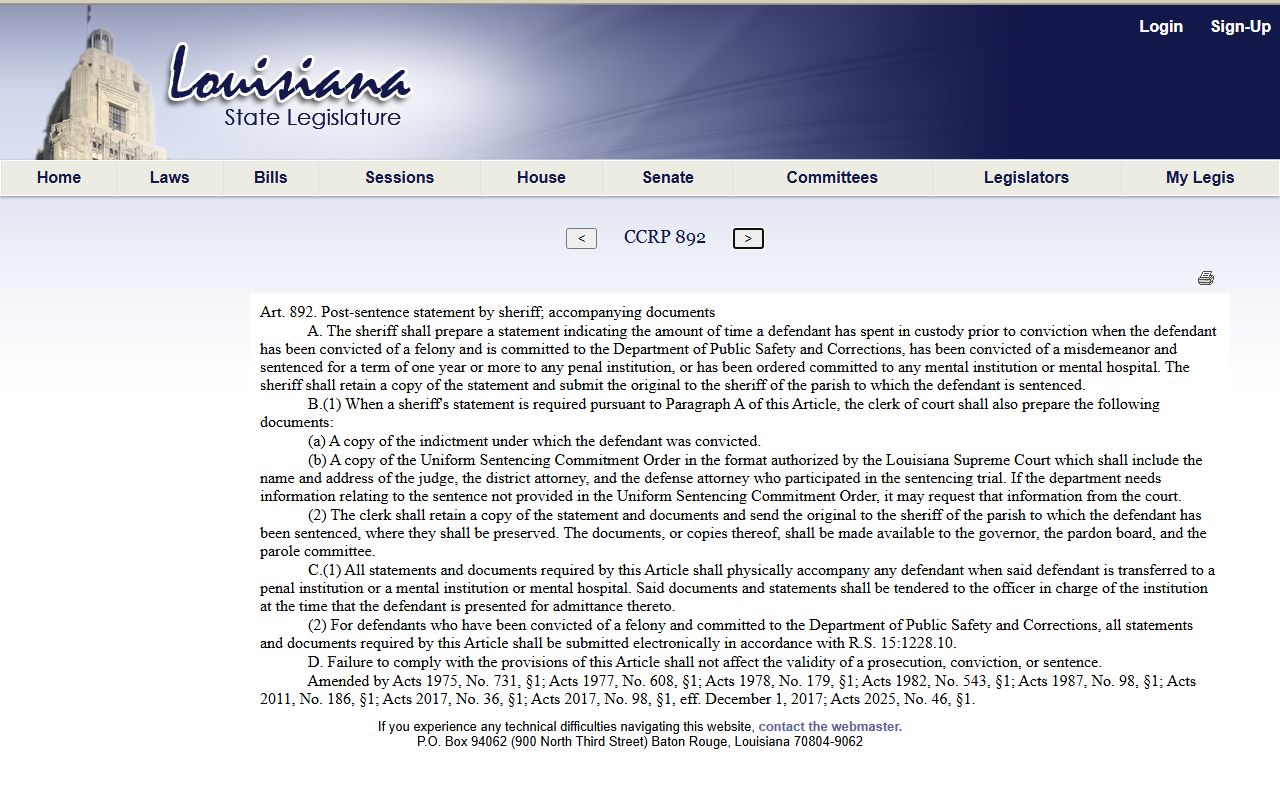
La. Code Crim. Proc. Art. 976 sets out expungement of arrest records for misdemeanors and felonies in certain cases.
The Clerk's expungement page points to the forms and the local filing steps.
Mugshots and Booking Photos
A booking photo, or mugshot, may appear in the Sheriff's portal result depending on policy and the type of view. A mugshot records a booking. It is not a conviction, and it does not mean the case ended in guilt. Many private mugshot sites republish these images out of context, but the official source is the Sheriff. Use the parish portal rather than a third-party site for accurate, current custody data.
If a charge is later dropped or expunged, the booking photo on the official portal should drop off public view, even if copies linger elsewhere online. Louisiana law also limits how some sites can charge people to remove a mugshot, so a person worried about an old booking image should look to the expungement process and the official record first.
Statewide Criminal Records Search
Parish records cover local cases, but a full criminal history can span the state. Louisiana State Police maintains statewide criminal history data, and certain background checks run through state channels. The 15th Judicial District Attorney prosecutes felony and misdemeanor cases for Lafayette, Acadia, and Vermilion Parishes. A person who cannot afford a lawyer applies for appointed counsel through the public defender process, which is structured by the Louisiana Public Defender Board.
For sex-offender data, Louisiana publishes a public registry that can be searched by name or location. That registry is separate from the parish jail roster and the court record.
The District Attorney and the public defender play opposite roles. The DA represents the state and decides what charges to file. The public defender represents people who cannot afford a lawyer. They are not the same office, and the DA does not provide defense help. Crime victims can ask the DA about case status, restitution, and victim impact statements, and may also register for custody alerts through VINELink.
Background Check Considerations
Arrest data is easy to misuse. An arrest record alone does not show whether a person was charged, convicted, or cleared. Federal law limits how these records can be used for credit, employment, housing, and similar decisions. This site is not a consumer reporting agency, and its information cannot be used for those regulated purposes.
Note: Do not treat an arrest or booking as proof of guilt; always confirm the case outcome through the official court record before relying on it.
Restricted Criminal Records in Lafayette County
Some criminal records are closed. Juvenile records are restricted under the Louisiana Children's Code. Sealed and expunged records leave public view. Active investigative files can be withheld while disclosure would harm a case. Grand jury materials are generally confidential. Victim and protected-address information is redacted.
Expungement of eligible misdemeanor convictions follows its own statute, with waiting periods and exceptions.
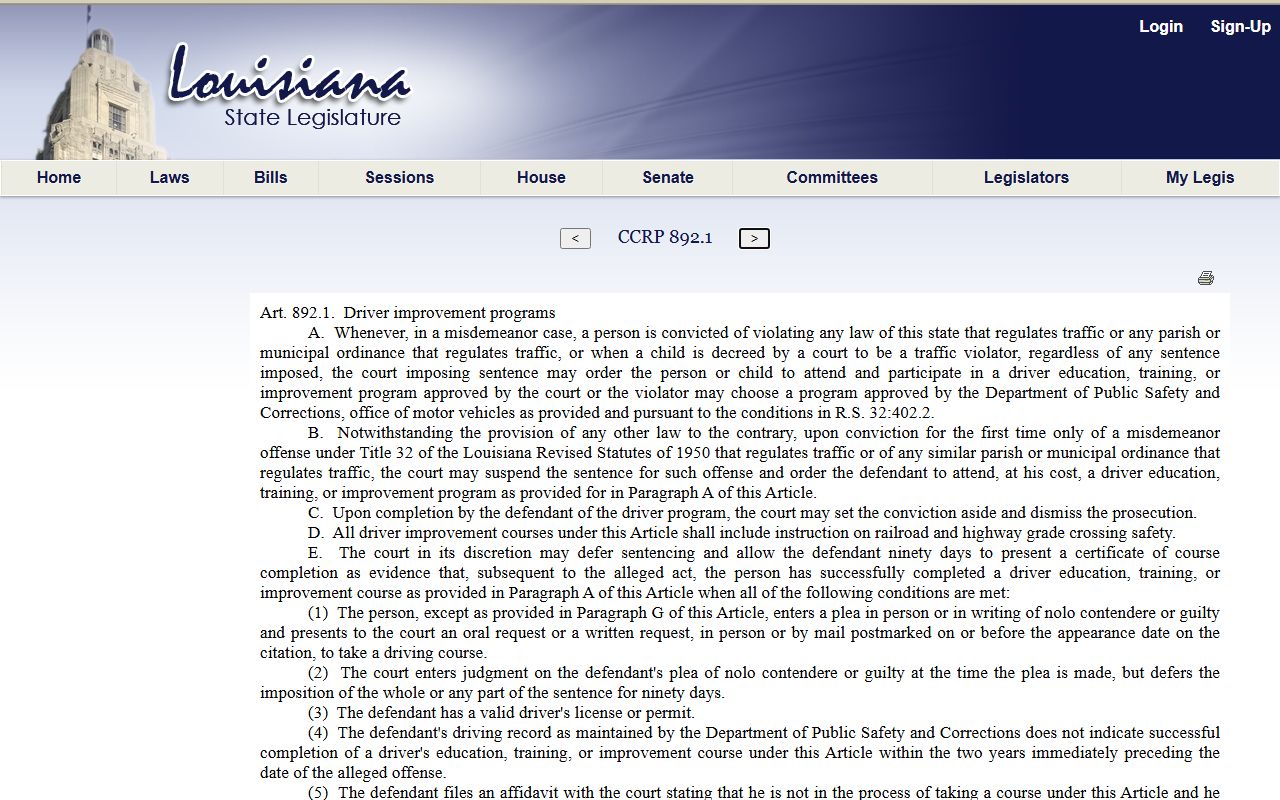
La. Code Crim. Proc. Art. 977 covers expungement of misdemeanor conviction records.
Common denial reasons include an ineligible offense, unpaid costs, the wrong waiting period, or incomplete service on the required agencies.