
Lafayette County District Court Overview
The 15th Judicial District Court is Louisiana's general trial court for Lafayette Parish. It hears serious criminal cases, large civil suits, family law, juvenile matters, successions, and other proceedings assigned by state law. It is a state court, not a federal court. Federal cases for the parish go to the U.S. District Court for the Western District of Louisiana instead. The district court shares its brand across three parishes, but each record stays tied to the parish where the matter was filed.
For Lafayette Parish users, business usually starts at the Lafayette Parish Courthouse on South Buchanan Street. The Clerk of Court keeps the filings, and the court runs the divisions, calendars, and programs. Treat the two as partners: one holds the records, the other hears the cases. Because the same court serves three parishes, a search tool may ask which parish you mean, so confirm Lafayette Parish when the option appears.
List of Lafayette County Courts
Several courts handle cases in the parish at different levels. The district court is the main trial court, while city and lower courts handle local and limited matters. The table lists the key courts and where they sit.
| Court | Type | Address | Phone |
|---|---|---|---|
| 15th Judicial District Court | State trial court | 800 South Buchanan Street, Lafayette, LA 70501 | See 15thjdc.org |
| Lafayette Parish Clerk of Court | Records custodian | 800 South Buchanan Street, Lafayette, LA 70501 | See lpclerk.com |
| Lafayette City Court | City court | 105 East Convent Street, Lafayette, LA 70501 | (337) 291-8720 |
| Justice of the Peace Courts | Limited local | Parish precincts | See parish listings |
District Court vs. City Court vs. Justice Court
Each court level handles a different slice of cases. The district court takes the most serious and the largest matters. City court handles city traffic, misdemeanors, and smaller civil claims. Justice of the peace courts handle small civil disputes and limited local matters. The table compares them.
| District Court | City Court | Justice / JP Court | |
|---|---|---|---|
| Civil Scope | Major civil suits | Smaller civil claims | Small local disputes |
| Criminal Jurisdiction | Felonies and serious cases | City misdemeanors and traffic | Limited local matters |
| Family Cases | Yes | Limited | No |
| Appeals To | Third Circuit Court of Appeal | District court or appeal court by rule | District court |
For the city court side of traffic and misdemeanors, see traffic court records.
How a Case Moves Through the Lafayette County System
A case follows a path from filing to appeal. Criminal and civil cases run differently, but both can end at the appellate level. The flows below show the typical order.
Criminal flow: Arrest › First Appearance › Indictment or Bill of Information › Arraignment › Pretrial › Trial › Sentencing › Appeal
Civil flow: Petition Filed › Answer › Discovery › Pretrial › Trial › Judgment › Appeal
Most cases resolve before trial through pleas, settlements, or dismissals, so the docket often ends well before the final step in these flows.
Civil, Family, and Criminal Divisions
The district court organizes work into divisions, each led by a judge. Criminal divisions handle felonies and serious charges. Civil divisions handle suits and judgments. Family matters, including divorce, custody, and support, run through the court's family work. The assigned division and judge appear on the case record and the court calendar, which is why knowing the division helps you find the right courtroom and setting.
The court also runs specialty dockets, such as drug and treatment court, that combine supervision with treatment. The specialty court page lists current programs, and the court dockets page covers how settings appear. Specialty dockets bring participants back often for review, which looks different from a one-time hearing on a standard division calendar.
Judicial District and Appeals
The 15th Judicial District covers Lafayette, Acadia, and Vermilion Parishes. When a party disagrees with a district-court ruling, the appeal goes to the Louisiana Court of Appeal, Third Circuit. From there, the Louisiana Supreme Court may take certain cases on discretionary review. The Supreme Court also oversees the state judiciary and attorney discipline.
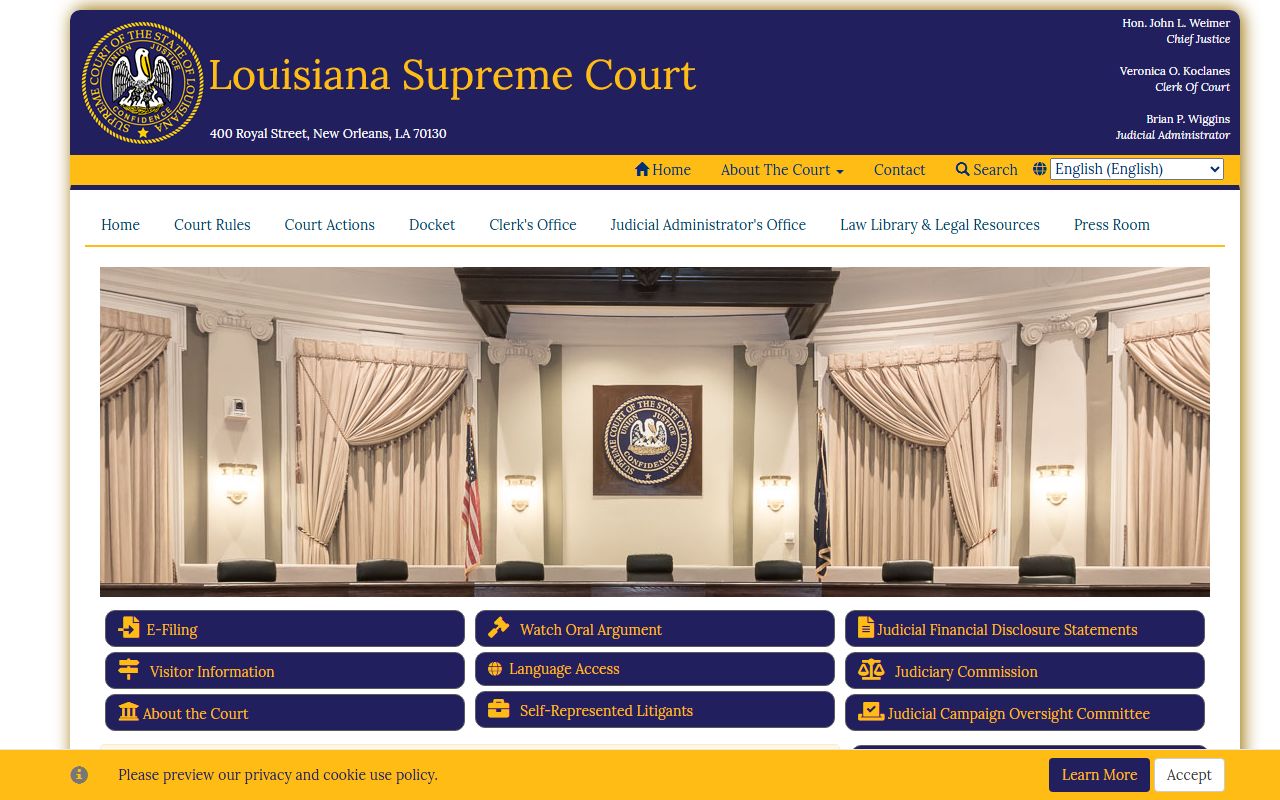
The Louisiana Supreme Court sits at the top of the state court system.
The Louisiana Supreme Court is the state's highest court and the final stop for many state appeals.
An appeal does not retry the facts; it reviews the lower court's handling of the law and the record.
District Court vs. Federal Court
The state district court and the federal court are separate systems. The 15th JDC handles state criminal and civil matters under Louisiana law. Federal cases, such as federal crimes and federal-question lawsuits, go to the U.S. District Court for the Western District of Louisiana. Federal appeals go to the U.S. Court of Appeals for the Fifth Circuit, not the state Third Circuit. Federal records are searched through the federal courts and PACER, not the parish Clerk.
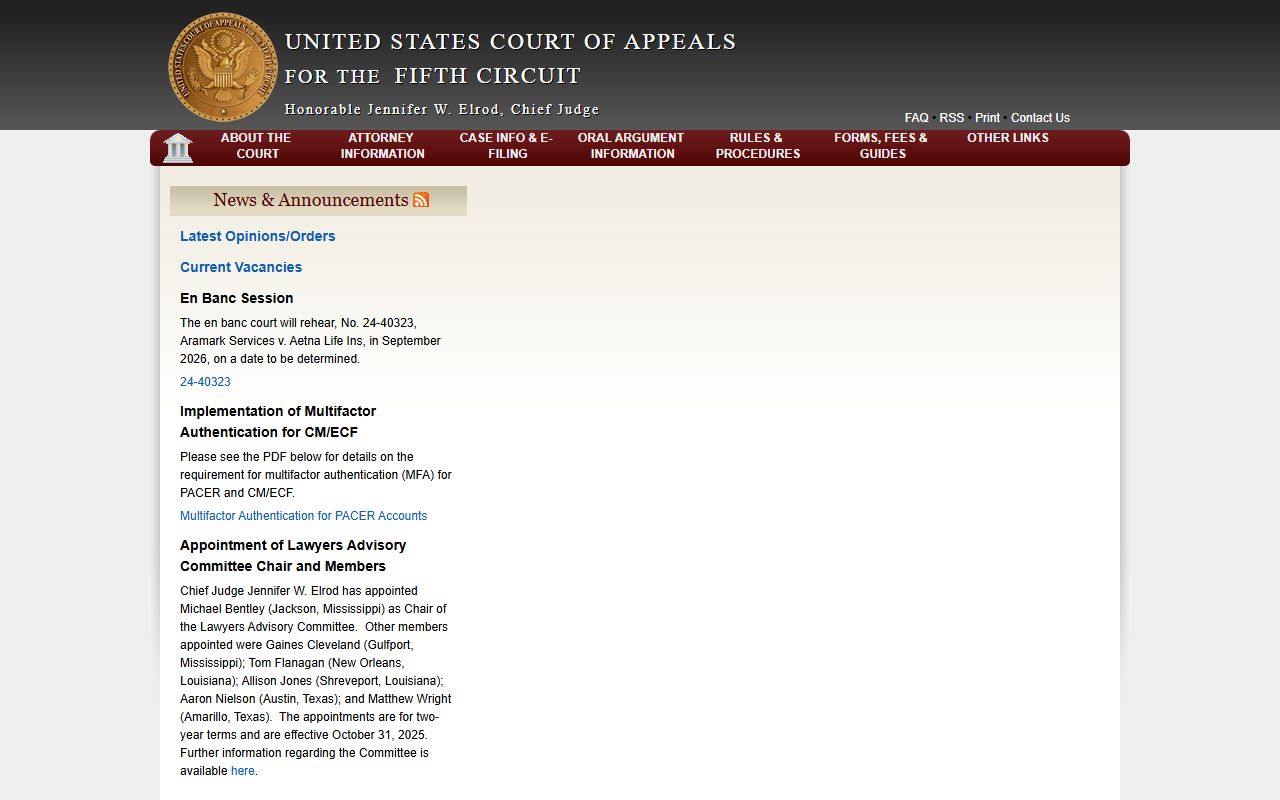
The Fifth Circuit hears federal appeals for this region.
The U.S. Court of Appeals for the Fifth Circuit handles federal appeals covering Louisiana.
So a case in state district court and a case in federal court follow different paths and live in different record systems.
Magistrate and Lower Courts
Lower courts take pressure off the district court. Lafayette City Court handles city traffic, misdemeanors, OWI, worthless-check, civil, and juvenile divisions from the East Convent Street building. Mayor's courts handle municipal ordinance and traffic matters where they exist. Justice of the peace courts handle small civil and limited local disputes in parish precincts. These lower-court records are not always in the same system as 15th JDC records, so where a ticket or claim was filed decides where you search. A case can also move up a level. A serious charge that starts with an arrest handled locally may end up as a felony in the district court, while a minor matter stays in city court. Reading the court name on a notice tells you which system holds the file.
Legal Help for Lafayette County Court Users
People who cannot afford a lawyer have options. Acadiana Legal Service Corporation provides free civil legal aid to eligible residents across much of Louisiana. The Lafayette Bar Association also runs pro bono and self-help programs. For criminal defense, a person who qualifies applies for appointed counsel through the public defender process.
Acadiana Legal Service Corporation is a key civil legal-aid resource for the parish.
Acadiana Legal Service Corporation offers free civil legal services for eligible residents.

Clerk and court staff can explain procedure but cannot give legal advice, so these resources fill an important gap.