
How to Search Lafayette County Court Records
The best place to begin is the Lafayette Parish Clerk of Court. The Clerk is the local custodian for civil, criminal, family, probate, marriage, and land records, and the office sorts these by department. Online access runs through the Clerk's linked tools, ClerkConnect, eClerks LA, and eSearch. Court dates and calendars come from the 15th Judicial District Court, which serves Lafayette, Acadia, and Vermilion Parishes. Pick the record type first. A divorce file, a criminal case, and a succession may sit in different modules with different access rules.
Before you start, gather what you know. A full name helps. A case number helps more. A rough filing date narrows older records. Here is a simple workflow.
- Go to the Clerk site at lpclerk.com and choose the department or online service that fits your record.
- For case records, open ClerkConnect or eClerks LA. Search by party name first if you do not have a case number.
- Narrow the search by record type and date range to cut down the result list.
- For a court date, use the 15th JDC court calendar instead of the record index.
- Request a certified copy from the Clerk if you need one. An online image or index print is not a certified copy.
The Clerk of Court homepage links each service in one place, which makes it the simplest first stop for most searches.
Use the Clerk of Court homepage to reach civil, criminal, marriage, and online-records services from a single menu.

From this page you can move to the civil, criminal, marriage, and online-search sections without hunting through separate sites.
Lafayette County Court Records Search Fields
Clerk portals share a common set of search fields. Most let you search by party name, by case or instrument number, or by a date range. Some modules, such as mortgage or conveyance records, may need account access. The table below lists the fields you are likely to see on the parish court-record tools.
| Field Label | Type | Required | Notes / Format |
|---|---|---|---|
| Parish / Court | Dropdown | Yes | Select Lafayette Parish or the 15th Judicial District Court on multi-parish tools. |
| Record category | Dropdown / tabs | Conditional | Civil, criminal, family, probate, mortgage, conveyance, or marriage. |
| Last name | Text | Name search | Surname of a party to the case. |
| Case number | Text | Case search | Best when the court case number is known. |
| Date range | Date | No | Filing or recording start and end dates. |
Field labels and options can change by module and by account access.
The Lafayette County Judicial System
Louisiana uses a layered court system. The 15th Judicial District Court is the main trial court for Lafayette Parish. It hears felony criminal cases, large civil suits, family law, juvenile matters, and successions. Below it sit Lafayette City Court, mayor's courts, and justice of the peace courts, which handle traffic, small civil claims, and local ordinance matters. Appeals go up, not down.
Appeals from the 15th JDC go to the Louisiana Court of Appeal, Third Circuit, and then to the Louisiana Supreme Court. The district court is a state court. It is not the federal court. Federal cases for this area go to the U.S. District Court for the Western District of Louisiana.
Case flow: Justice of the Peace / City Court › 15th Judicial District Court › Louisiana Court of Appeal, Third Circuit › Louisiana Supreme Court
| Court | Jurisdiction | Case Types |
|---|---|---|
| Louisiana Supreme Court | Statewide, highest court | Discretionary review, attorney discipline, constitutional matters |
| Court of Appeal, Third Circuit | Regional appeals | Civil and criminal appeals from the 15th JDC |
| 15th Judicial District Court | Lafayette, Acadia, Vermilion | Felonies, major civil, family, juvenile, successions |
| City / Mayor's / JP Courts | Local, limited | Traffic, misdemeanors, small civil, ordinances |
The 15th Judicial District Court site explains its divisions, judges, calendars, and programs for the three parishes it serves.
The 15th Judicial District Court homepage is the judicial side of the system, separate from the Clerk's record office.
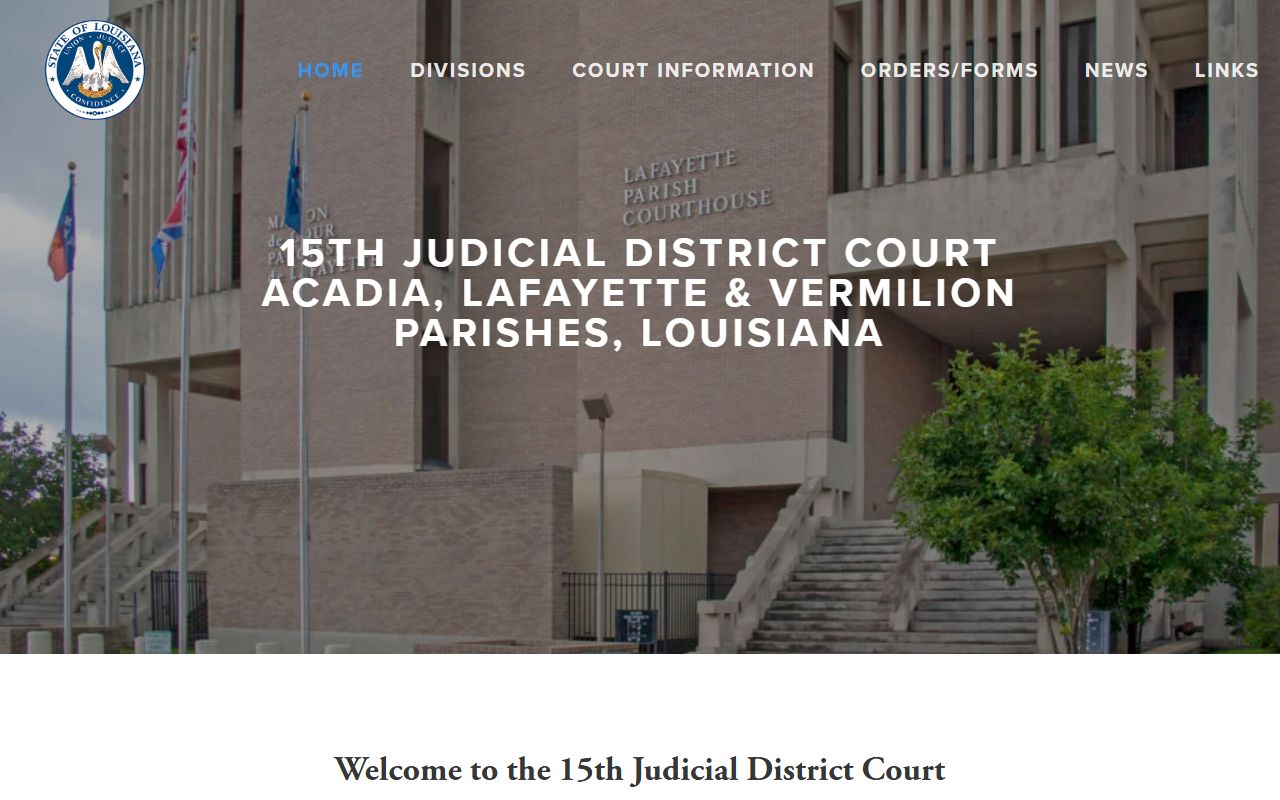
Treat the court site and the Clerk site as a pair: one runs the dockets and divisions, the other holds the filed records. More detail sits on the Lafayette County District Court page.
Lafayette County Courthouses
Most local court and clerk business runs through the Lafayette Parish Courthouse in downtown Lafayette. The Clerk of Court counters sit there, along with the functions tied to the 15th Judicial District Court. Lafayette City Court handles many city traffic and misdemeanor matters from a separate downtown building. The cards below list the main offices.
Lafayette Parish Courthouse / Clerk of Court
800 South Buchanan Street
Lafayette, LA 70501
See Clerk contact page for department numbers
15th Judicial District Court
800 South Buchanan Street
Lafayette, LA 70501
See 15th JDC contact page
Lafayette City Court
105 East Convent Street
Lafayette, LA 70501
(337) 291-8720
Types of Court Records Available in Lafayette County
The parish produces several kinds of court records. Each comes from a different department or court. Civil and criminal records flow through the 15th JDC and the Clerk. Family records cover divorce, custody, and support. Successions are Louisiana's version of probate. Traffic tickets often live in city court, not the district court.
Which court made the record decides where you search. A city traffic ticket and a district-court felony are not in the same file room.
- Criminal records - charges, minutes, pleas, sentences, and dispositions from district court.
- Civil records - suits, judgments, garnishments, liens, and related pleadings.
- Family / divorce records - divorce, custody, support, and protective orders.
- Probate / succession records - wills, heir filings, and judgments of possession.
- Traffic records - citations and city court cases, often handled by Lafayette City Court.
What Lafayette County Court Records Show
A typical case record holds a set of standard fields. You can expect a case number, the court and parish, the assigned division or judge, and the parties. Filings, hearings, and the final outcome show up in the docket. Sensitive data is redacted. Social Security numbers, juvenile information, sealed filings, and protected victim data do not appear in public views.
| Field | What It Shows |
|---|---|
| Case Number | The unique docket ID assigned by the clerk or court. |
| Filing Date | The date the petition, bill, or motion was filed. |
| Parties | Plaintiff and defendant, or state and defendant, or petitioner and respondent. |
| Charges / Cause | The criminal charge or the civil cause of action. |
| Disposition | The outcome, such as dismissed, pled, convicted, or judgment entered. |
| Sentence / Judgment | The penalty or the civil ruling, plus any fines or costs. |
Public Access Laws for Lafayette County Court Records
Louisiana's Public Records Law starts from a broad rule: records held by public bodies are open unless a law makes them private. Court records also follow judiciary rules and confidentiality statutes. So many clerk records are public, but that access does not override juvenile, adoption, sealed, or active-investigation limits. A person denied access can challenge the denial in court.
Key Statutes:
La. R.S. 44:1 - Defines public bodies and public records, setting the baseline that parish records are presumed open.
La. R.S. 44:31 - Gives any adult the right to inspect and copy public records, except where the law says otherwise.
La. R.S. 44:32 - Requires custodians to allow inspection and permits reasonable copy fees.
More on requests and exceptions sits on the Lafayette County public records page.
Records That Are Restricted or Confidential
Some records are closed by law. Juvenile case files are restricted under the Louisiana Children's Code. Adoption records are confidential. Sealed records need a court order to view. Expunged records are pulled from public access, though some agencies keep access under the law. Active law-enforcement files can be withheld while an investigation is open.
To view a sealed record, a person usually has to file a motion in the case and ask the judge for access. The court weighs the reason against the privacy interest. Clerk staff can explain the process but cannot grant access on their own.
Specialty Courts in Lafayette County
The 15th Judicial District Court runs problem-solving courts that work differently from a normal docket. These programs mix judicial supervision with treatment and regular check-ins. A drug or treatment court serves eligible defendants whose conduct ties to substance use. Participants are screened, ordered into treatment, drug tested, and brought back for status reviews. Completion can lead to a better case outcome than a standard sentence.
A veterans or behavioral-health track may also be offered. Screening is required, and program availability changes over time, so the official court page is the place to confirm current options.
The court publishes program details on its specialty court page, and the court calendar shows scheduled dockets.
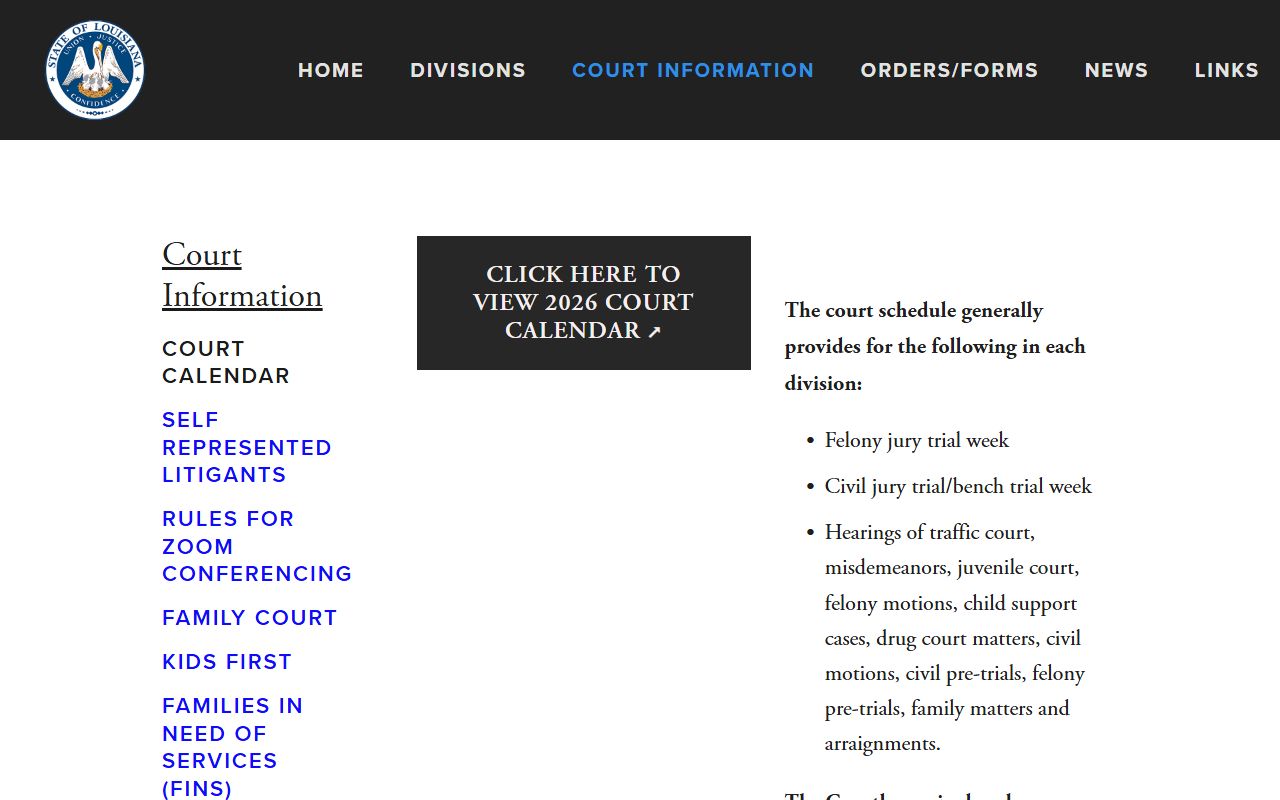
The calendar is the right tool for a court date; the record index is the right tool for a filed case. They are not the same thing.
Lafayette County Sheriff and Jail
The Lafayette Parish Sheriff's Office runs the parish jail and is the official source for custody status. Its corrections offender-information page lets you search people in custody and recent bookings. The Sheriff replaced the old JADES system with the 365Labs Community Portal, and the page also links to VINELink for custody alerts.
A jail booking is not a conviction. Roster data shows custody, charge, and bond, not the court outcome. For full roster help see Lafayette County inmate records, and for active warrants see warrant records.
The Sheriff's offender information page gathers the inmate search, money, mail, and visitation links in one spot.
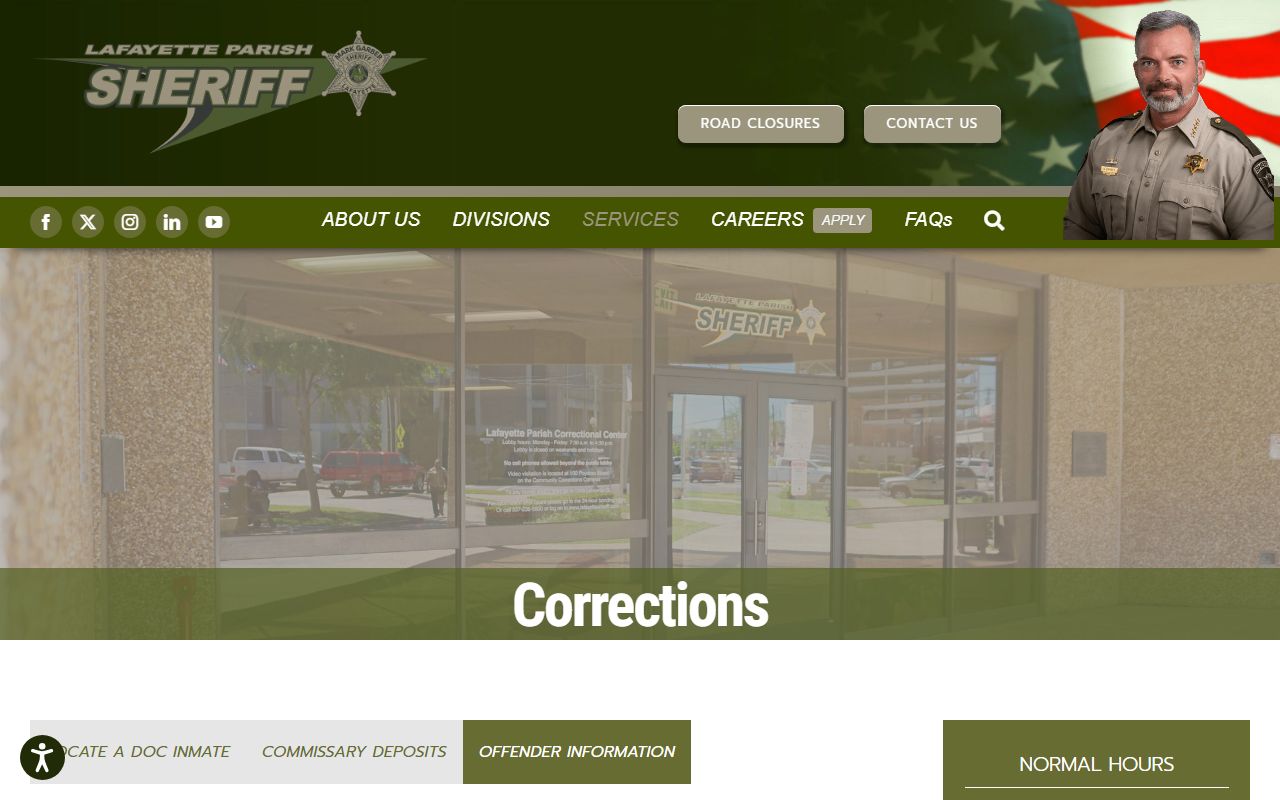
Use that page to reach the current portal, since older roster links may no longer load.
Marriage, Divorce, and Probate Records
The Clerk of Court issues marriage licenses and holds marriage records. Divorce files are family-court records kept through the Clerk. Successions, Louisiana's name for probate, are also filed with the Clerk and heard in the 15th JDC. See the marriage and divorce records page and the probate records page for steps and fees.
- Testator
- The person who made a will.
- Executor
- The person named in a will to settle the estate.
- Judgment of possession
- The succession ruling that transfers estate property to the heirs.
Lafayette County Court Records Fees
The Clerk charges set fees for copies and certified documents. Copy fees are modest, but certified copies cost more because the office must verify and stamp them. Recording and civil deposit fees are higher and depend on the filing. The current fee schedule is posted on the Clerk site. The table shows common copy fees.
| Item | Amount |
|---|---|
| Plain copy per page | $1.00 |
| Certified copy | $10.00 plus copy fee |
| Conformed copy | $5.00 plus copy fee |
| Nonstandard paper size | $20.00 per page |
Forms and the full fee list are posted on the Clerk's forms page and fee page.
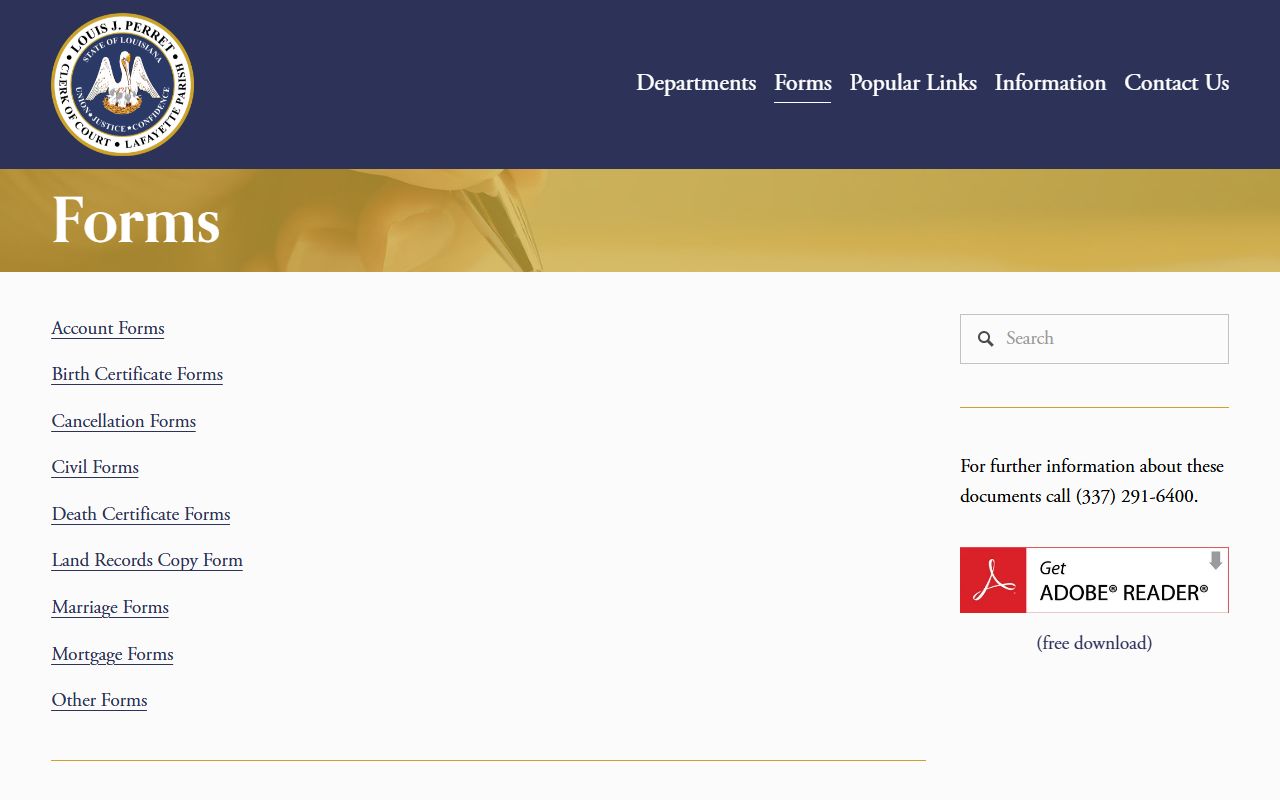
Download the matching form before you visit so the counter visit goes faster.
Note: Birth and death certificate fees are cash only at the Clerk, so bring exact funds for those requests.
How to Interpret Lafayette County Court Records
Court records use shorthand that can confuse first-time readers. A bill of information is the prosecutor's charging paper. An indictment comes from a grand jury. A capias is a court-issued warrant, often for a missed date. "Dismissed with prejudice" means the case cannot be refiled, while "without prejudice" leaves the door open.
Watch the gap between a charge and a conviction. A charge is an accusation. A conviction is a finding or plea of guilt. A booking, a charge, and a sentence are three different stages, and only the disposition tells you how the case ended.
Accuracy and Record Limitations
Online records can lag behind the live file. Clerks index filings as they process them, and some older or non-imaged records never reach the online index. An empty search does not always mean no case exists. For criminal and custody data, timing matters even more, since bookings and releases change by the hour. When a detail will affect a real decision, confirm it with the office that holds the record.
Note: Always verify a court detail with the Clerk or the issuing court before you rely on an online record for any legal or personal decision.
History of Lafayette County Courts
Lafayette Parish sits in Acadiana, and Louisiana's civil-law roots shape its court language. Estates are called successions. A warrant may be called a capias. The records job belongs to one elected parish Clerk of Court, not a split between a county clerk and a district clerk. The 15th Judicial District Court has long served Lafayette along with Acadia and Vermilion, so the same court brand covers three parishes while each file stays tied to the parish where it was opened.
Frequently Asked Questions
How do I search Lafayette Parish court records?
Start at the Clerk of Court site and pick the department or portal that matches your record. ClerkConnect, eClerks LA, and eSearch are the linked online tools. For a court date, use the 15th JDC calendar. If a record is old, sealed, or not imaged, contact the Clerk directly. An empty online result does not always mean no case exists.
Is the 15th JDC the same as federal court?
No. The 15th Judicial District Court is Louisiana's state trial court for Lafayette, Acadia, and Vermilion Parishes. Federal cases for the area go to the U.S. District Court for the Western District of Louisiana. State records are handled by the parish Clerk. Federal records are searched through the federal court and PACER.
Can I get certified copies online?
An online image or index print is not a certified copy. Certified copies must be requested from the Clerk, and a certification fee applies on top of the per-page copy fee. Use the Clerk fee page and department contacts for the current amount and the accepted payment methods before you request one.
More on the Lafayette County Court Records FAQ page.